
Keep your basement between 30% and 50% relative humidity, and treat anything that stays above 60% as a problem to fix. That is the range the EPA gives for homes: keep indoor humidity below 60 percent, ideally between 30 and 50 percent. Basements run damper than the rest of the house, so the number you see on a hygrometer in July may surprise you. This guide explains what the readings mean, how to measure them properly, and what to do in a Chicagoland basement when they drift too high.
TL;DR
- Aim for 30% to 50% relative humidity. Below 60% is the EPA’s ceiling; above it, mold has what it needs.
- Basements read higher than upstairs because they are below grade, cool and in contact with damp soil.
- A $15 to $20 hygrometer, read at several spots and several times of day, tells you more than guessing from smell.
- A dehumidifier manages the symptom. Water entering through gutters, grading or the foundation is the cause, so check that first.
- Visible mold covering more than 10 square feet, or humidity that stays high after you fix the obvious causes, is a job for a professional.
Table of Contents
- What humidity level is normal for a basement?
- Why basements run more humid than the rest of your house
- How to measure basement humidity
- Signs your basement humidity is too high
- Fix the source before you buy a bigger dehumidifier
- Should a dehumidifier run all the time?
- Perspective: what we see in Chicagoland basements
- When humidity means you need professional help
- A seasonal routine for Chicagoland homes
- How The Clean Genius can help
- FAQ
- Sources
What humidity level is normal for a basement?
Relative humidity (RH) is the share of moisture the air is holding compared with the most it could hold at that temperature. The EPA’s guidance for the whole home is a maximum of 60% and an ideal of 30% to 50%. Basements are not exempt from that target, but they are the hardest part of the house to hit it in.
Here is how we read the numbers when we walk a basement:
| Reading (RH) | What it usually means | What to do |
|---|---|---|
| Under 30% | Very dry air, common in winter with the furnace running | Check for static, cracked wood, dry skin. Avoid adding moisture until you have measured |
| 30% to 50% | The target range | Keep monitoring, especially after storms |
| 50% to 60% | Acceptable short term, a warning if it lasts | Run a dehumidifier, look for moisture sources |
| Above 60% for days | Mold-friendly conditions | Find and fix the source, dry the space, inspect for growth |
You will see other numbers online: some sites say 45% to 50% in summer and 30% in winter. Those are reasonable operating targets inside the EPA envelope. The hard line is the one the EPA draws: stay below 60%, and aim lower.
One caution about a single reading. Humidity changes with temperature. A basement at 55% in a cool 62°F room can feel clammy, and the same moisture content in a warmer room reads lower. That is why you track the trend, not one afternoon.
Why basements run more humid than the rest of your house
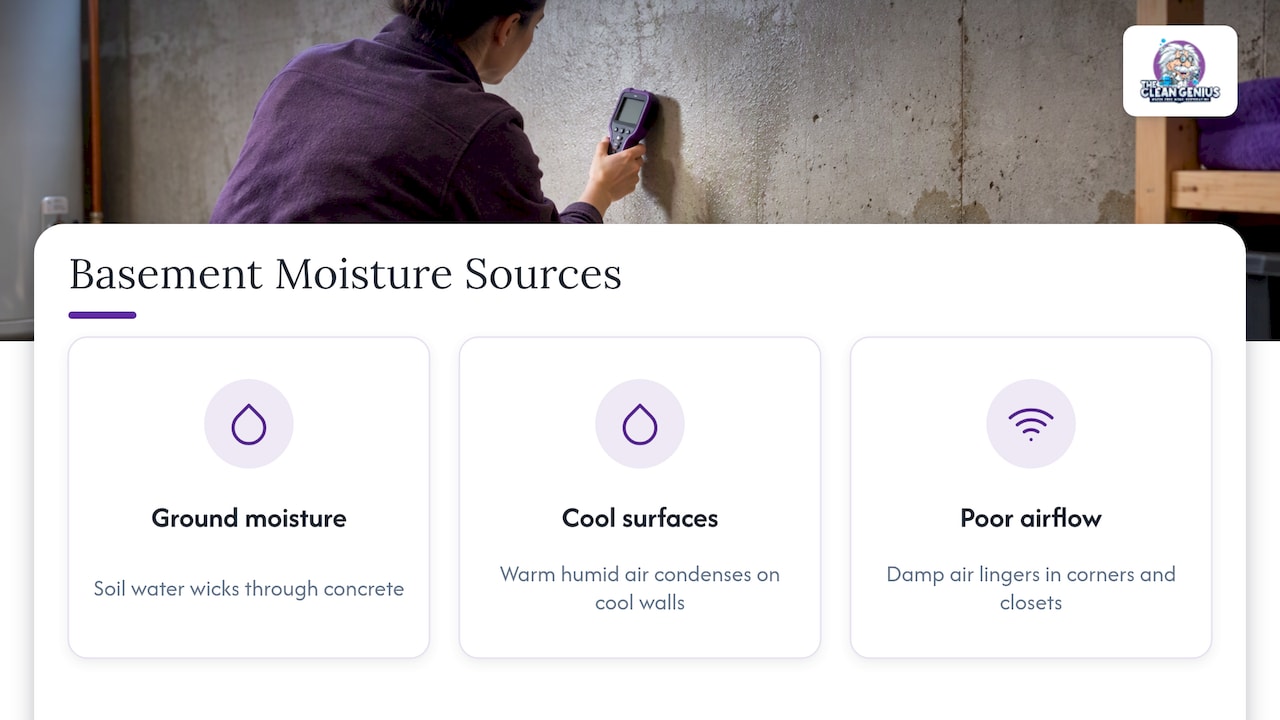
Three things work together below grade.
Ground moisture. Concrete floors and foundation walls are in contact with soil. Groundwater wicks through them by capillary action, slowly and invisibly, even when you never see a puddle.
Cool surfaces. Soil keeps basement walls and floors cool through the summer. When warm, humid air from outdoors or from upstairs reaches those surfaces, it cools quickly and drops its moisture as condensation. The EPA’s moisture guidance notes that water can enter a home by leaking or seeping through basement floors, and that everyday activities like showers and cooking add more.
Poor air movement. Basements tend to have few windows and little mixing with the rest of the house. Damp air sits in corners, behind stored boxes, and inside closets against exterior walls.
In the Chicago area this peaks from June through September, when outdoor air is hot and muggy and the basement is still cool. Spring thaw and heavy fall rain add a second wave, because saturated soil pushes more moisture toward the foundation.
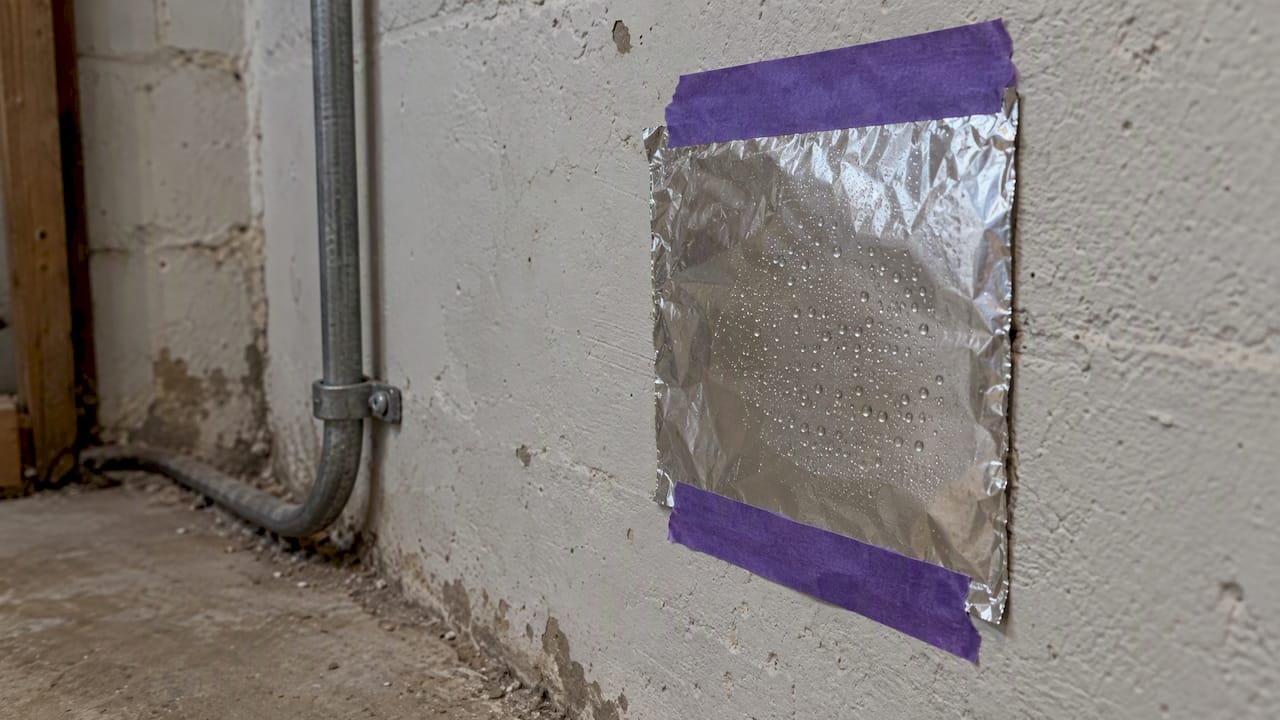
Condensation is not always a leak
Many homeowners call us convinced the foundation is leaking, when the wall is simply sweating. A quick test: tape a square of aluminum foil tightly to the wall, leave it for a day or two, then look. Droplets on the outside of the foil mean condensation from room air. Moisture on the wall side means water is coming through the wall. It is a rough check, not a diagnosis, but it points you in the right direction before you spend money.
How to measure basement humidity
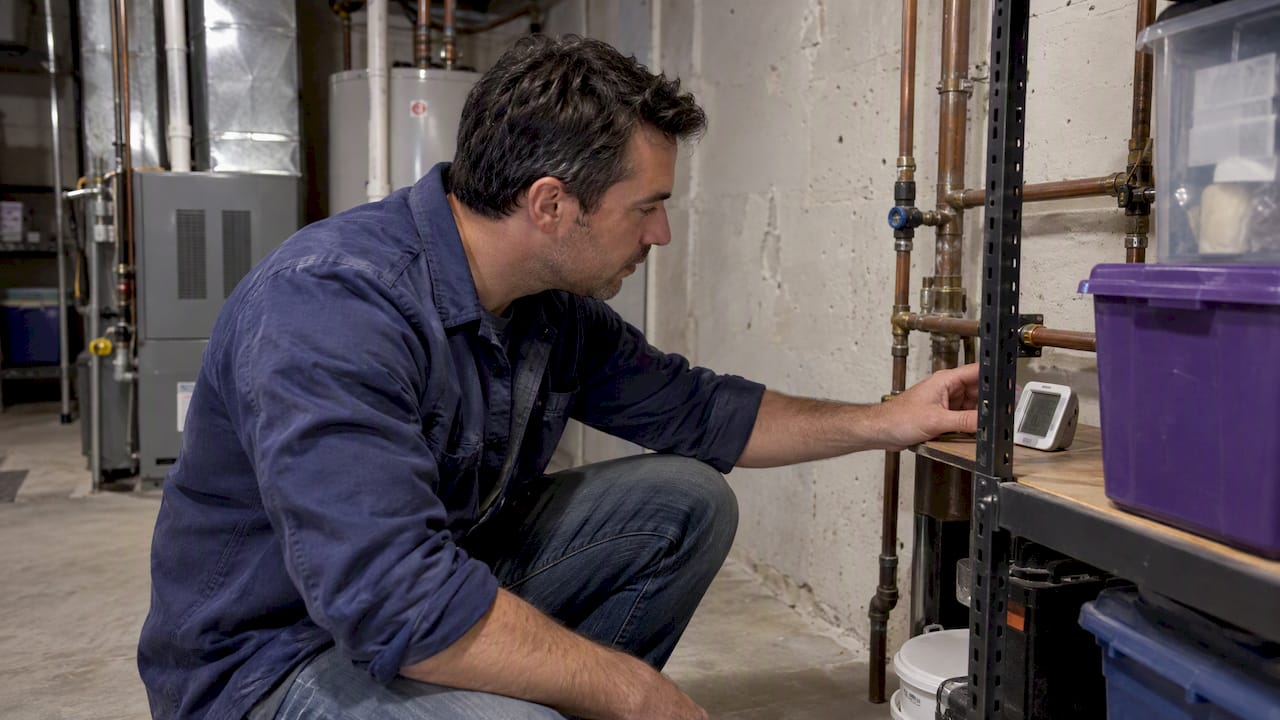
You do not need special equipment, only a digital hygrometer and some patience.
- Buy a digital hygrometer. A basic one that shows temperature and RH is enough. Place it at about chest height, away from the dehumidifier outlet, a floor drain or a laundry vent.
- Let it settle. Give it at least 30 minutes after you set it down before trusting the reading.
- Measure more than one spot. Try the center of the room, a corner on an exterior wall, inside a closet, and near the sump pit if you have one. A 10-point difference between spots tells you where moisture is entering.
- Log it for two weeks. Write down morning and evening readings, plus the weather. Notice what happens after rain, after laundry day, and during a hot, humid stretch.
- Compare with the target. Consistently under 50% is good. Regularly above 60% needs action.
A reading is only as good as the instrument. Cheap hygrometers can be off by several points. If your number looks suspiciously high or low, put a second unit beside the first for a day and compare.
This measure-first approach matters in winter too, when people reach for humidifiers. Measuring before you add moisture keeps you from pushing already-damp areas, like a cold basement corner, into condensation territory. The Illinois Extension notes the same pattern in its note on indoor pests: cool, humid conditions favor drain flies and fungus gnats, which is one more sign something nearby is staying damp.
Signs your basement humidity is too high
The hygrometer is the proof, but your senses usually notice first:
- A musty or earthy smell, especially when you first open the door
- Condensation on cold water pipes, windows or the foundation wall
- Peeling paint, white powdery deposits on concrete, or warped paneling
- Cardboard boxes that feel soft, or stored fabric that smells stale
- Dark spots on drywall, carpet edges, baseboards or the bottom of stored furniture
- Drain flies or other small pests around floor drains
Any one of these with readings above 60% means the basement is staying wet long enough to support mold. The EPA is clear that mold will not grow without moisture, so the humidity number is an early warning, not just a comfort issue.
Fix the source before you buy a bigger dehumidifier
The most common mistake we see is running a dehumidifier around the clock while water keeps coming in. The machine empties a bucket every day and the basement never gets dry. Work through the causes in this order.
1. Exterior water
The CDC advises that rainwater from gutters and the roof should drain away from the house, and that the ground should slope away from it to keep basements and crawl spaces dry. In practice:
- Clean gutters before the leaves come down and again after.
- Extend downspouts several feet from the foundation.
- Look for soil that has settled against the house and holds water after rain.
- Check window wells for standing water and clogged drains.
If your downspouts empty near the foundation, this is often the cheapest fix with the largest effect.
2. Moisture made inside the house
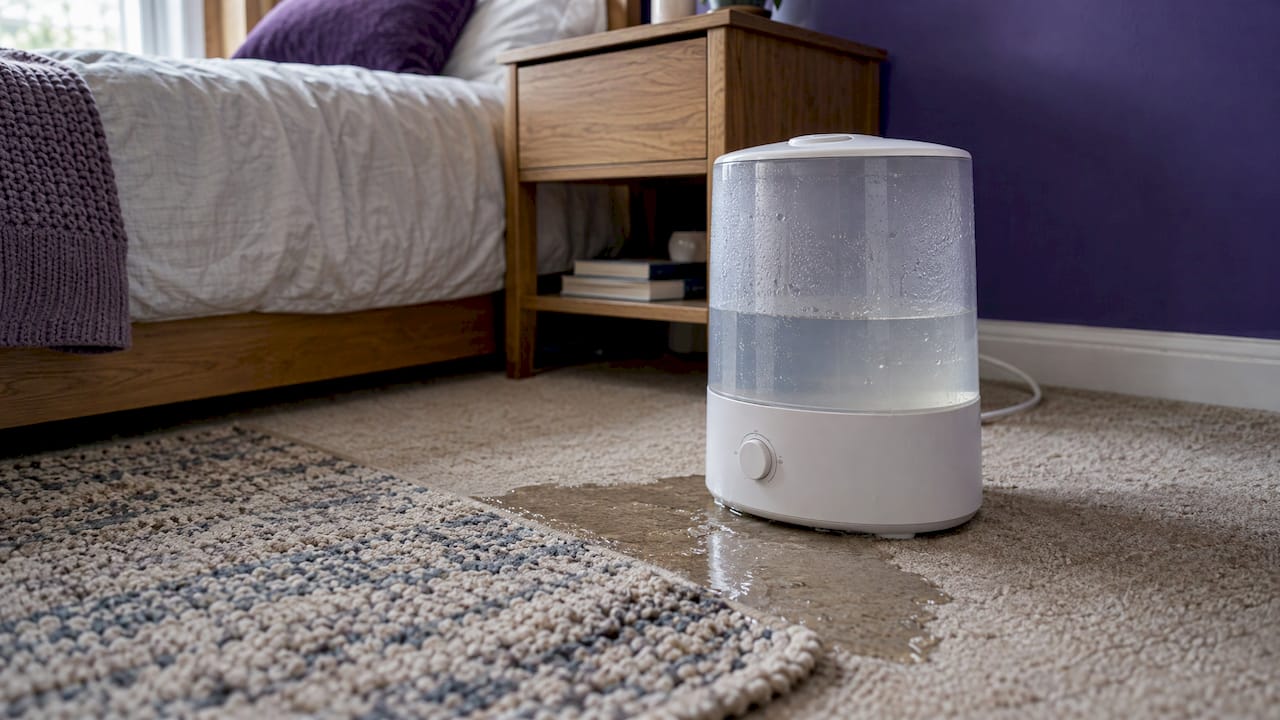
Dryers vented into the basement, a missing bathroom exhaust fan, a humidifier left on, and wet laundry hung to dry all add water to the air. Vent dryers outdoors and run exhaust fans during and after showers.
Remember also floor drains and unused sinks. The Illinois Extension points out these are common hidden sources of humidity and pests. Pour clean water into infrequently used drains and scrub them at the water line so the trap does not dry out and so musty drain odor does not get mistaken for basement dampness.
3. Tight houses that cannot breathe
Newer and recently air-sealed houses exchange less air with the outdoors. Illinois building guidance from the University of Illinois makes the case for building tight and ventilating right: sealing saves energy, but moisture from showering, cooking and laundry needs a mechanical way out. If you have sealed up your home recently and the basement got damper, ventilation is a likely missing piece.
4. Insulation and vapor barrier mistakes
Insulation or a vapor barrier in the wrong place can trap moisture inside a wall instead of letting the wall dry. The Building Science Education page on basement vapor retarders explains that the right type, correctly installed in the right location, helps manage moisture. If you plan to finish a basement, get this right before the drywall goes up.
5. Then, the dehumidifier
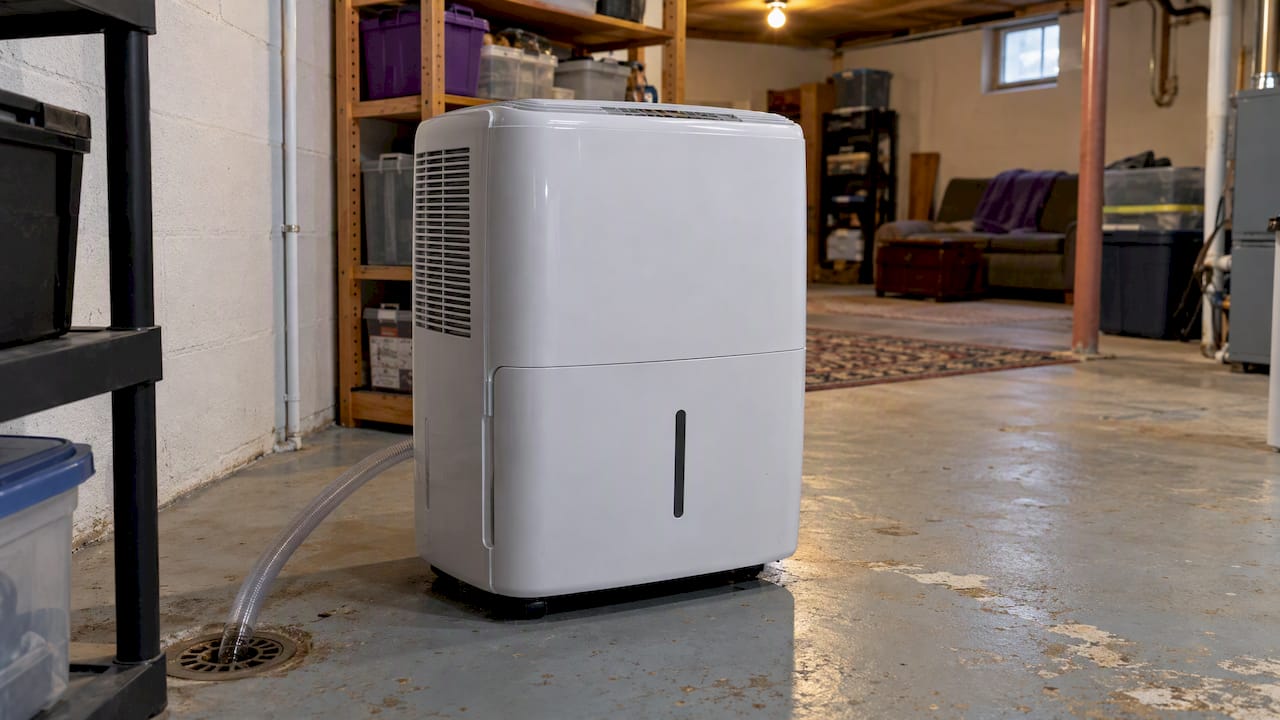
A dehumidifier is the right tool once the water sources are handled, and during a Chicago summer even a well-kept basement may need one. The CDC’s guidance is practical: use one when natural ventilation cannot keep humidity below 60%, clean it regularly, and run it into a drain where possible for continuous operation. A unit that fills a bucket and shuts off at 3 a.m. is not protecting anything. The tank, filter and coils also need cleaning, since a neglected unit can grow mold itself.
Set it to hold around 45% to 50% in summer, and place it in the open, away from walls, so air can flow through it. We cover how professionals use drying equipment in our guide to the role of dehumidifiers in water restoration.
Should a dehumidifier run all the time?
In a Chicago summer, often yes, or close to it, with a humidistat set to your target so it cycles itself. In spring and fall, it may run only after rain. In winter, the basement may sit at 30% to 40% with no help. The goal is not nonstop running; it is holding your target. If the unit never shuts off and the room never reaches it, you have either an undersized unit or, more likely, water entering the space.
Perspective: what we see in Chicagoland basements
We are a family-owned restoration company, and most of our basement calls start with the same sentence: “I thought it was just humid.” By the time we arrive, the reading may have been 65% for months, and there is mold behind a finished wall or under carpet.
Our view is simple. Humidity is information. A number above 60% is your house telling you water is getting somewhere it should not. Treat it that way. Fix the water path, dry the space, and only then decide whether you need equipment to maintain the range.
We also see the opposite problem: a homeowner scrubs visible mold, repaints, and the stain returns in six months. Cleaning without correcting moisture is temporary, which is why we talk about the cause in our piece on why remediation fails when moisture is not addressed. If you can see or smell mold, the CDC says mold exposure is a health concern, and hidden growth behind drywall or under carpet is common enough that an inspection is worth it.
Our rule of thumb for readers: measure first, fix the water second, dehumidify third, and call someone if the basement still will not dry.
— Jim
When humidity means you need professional help
Some situations are beyond a hygrometer and a dehumidifier:
- Mold covers more than about 10 square feet. That is roughly a 3-foot by 3-foot patch. The EPA’s cleanup guidance suggests bringing in a professional above that size.
- The musty smell has no visible source. Mold can sit behind walls, under flooring or in insulation.
- There has been a flood, sump pump failure or sewage backup. Wet materials need to be dried quickly. The EPA recommends drying within 24 to 48 hours if possible. After that, the risk of growth climbs.
- Humidity stays above 60% after you have fixed gutters, grading and indoor sources. Then water is likely entering through the foundation or a hidden plumbing leak.
The EPA also cautions against using bleach on porous materials, since it does not penetrate to the root of growth in drywall or wood. That is one reason DIY cleanup of anything larger than a small patch often fails. For help with the call, see our professional versus DIY mold removal guide, and if water was involved, mold removal after a basement flood and mold remediation after a sump failure.
A seasonal routine for Chicagoland homes
- Spring: Check gutters, downspouts and grading after the thaw. Test the sump pump by pouring water into the pit. Start logging humidity.
- Summer: Run the dehumidifier on a humidistat. Keep basement windows closed on muggy days so warm air does not condense on cool walls. Check floor drains.
- Fall: Clean gutters after leaf drop. Look at window wells. Confirm dryer venting.
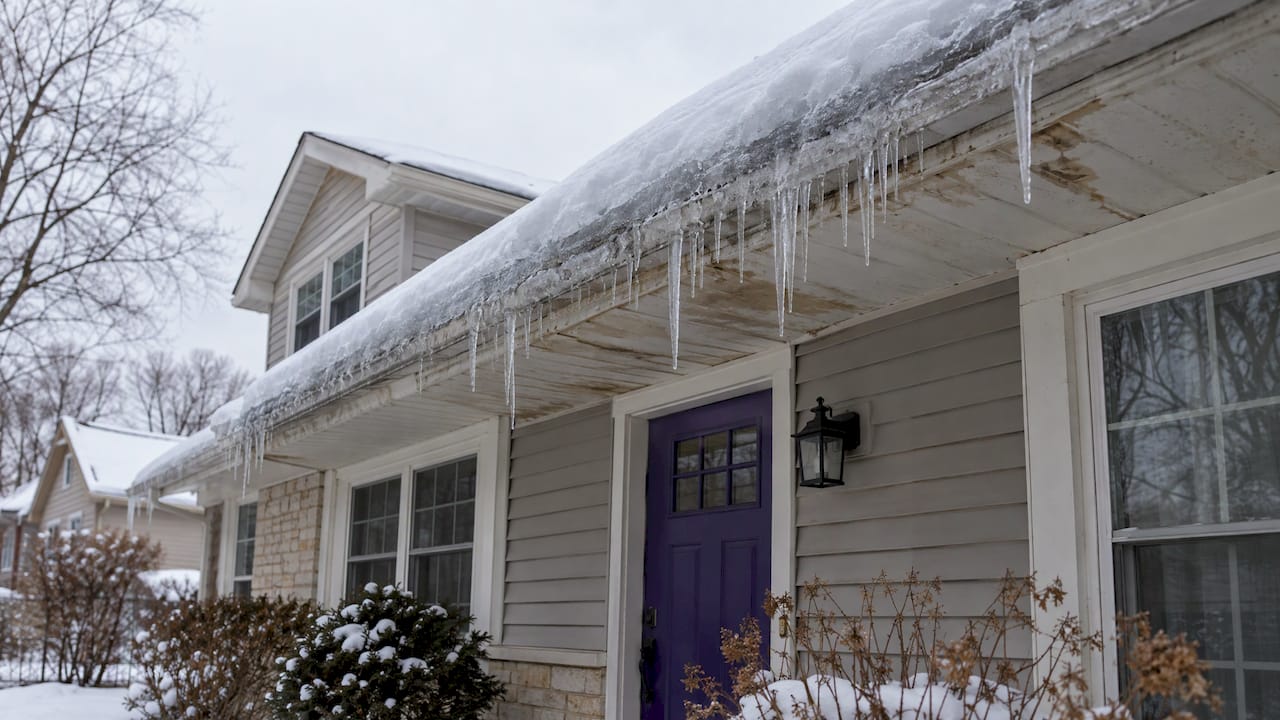
- Winter: Keep measuring. If you use humidifiers upstairs, do not let them push the basement or cold windows into condensation. Look for ice-dam leaks and frozen pipe damage in cold snaps.
This routine takes about an hour per season and costs very little. It is far cheaper than drying out a finished basement.
How The Clean Genius can help
If your readings stay high, you find mold, or water has already come into the basement, we can help. We serve homeowners across Chicagoland, including Arlington Heights, Naperville, Palatine, Schaumburg, Elgin and Wheaton, and we are available 24/7 for emergencies. Our team handles water damage restoration and complete dry-out, and mold removal and remediation using Pure Cloud dry-fog technology, and we work directly with your insurance when a claim applies. We do not publish prices, because every basement is different; we give you an on-site estimate after we see the problem.
FAQ
What is the ideal humidity level for a basement?
Between 30% and 50% relative humidity is the EPA’s ideal for indoor spaces, with 60% as the ceiling. In practice, many Chicago-area basements settle in the mid-40s to 50s in summer with a dehumidifier. If yours stays above 60%, treat it as a moisture problem.
Is 60% humidity too high for a basement?
A brief spike to 60% after a rainstorm is not a crisis. Staying at or above it for days or weeks creates conditions where mold can grow. At that point, find the source and bring the level down.
Is humidity higher in a basement than the rest of the house?
Usually, yes. Basements are below grade, in contact with damp soil and cooler than the rooms above. Warm, moist air condenses on those cool surfaces, so the basement reads damper even when the house above feels comfortable.
Can a basement be too dry?
Yes, particularly in winter when heating dries the air. Very low readings can cause static, cracked wood and irritated skin. Measure before adding moisture, since a cold corner can still condense even when the room average is low.
Sources
- A Brief Guide to Mold, Moisture and Your Home, US EPA
- What are the main ways to control moisture in your home?, US EPA
- Mold Cleanup in Your Home, US EPA
- Tribal IAQ Resource Directory: Mold and Moisture, US EPA
- Safety Guidelines: Reentering Your Flooded Home, CDC
- About Mold and Your Health, CDC
- Build Tight, Ventilate Right, University of Illinois
- Understanding Vapor Retarders for Basements, Building Science Education
- Common Indoor Insect Question in January, Illinois Extension