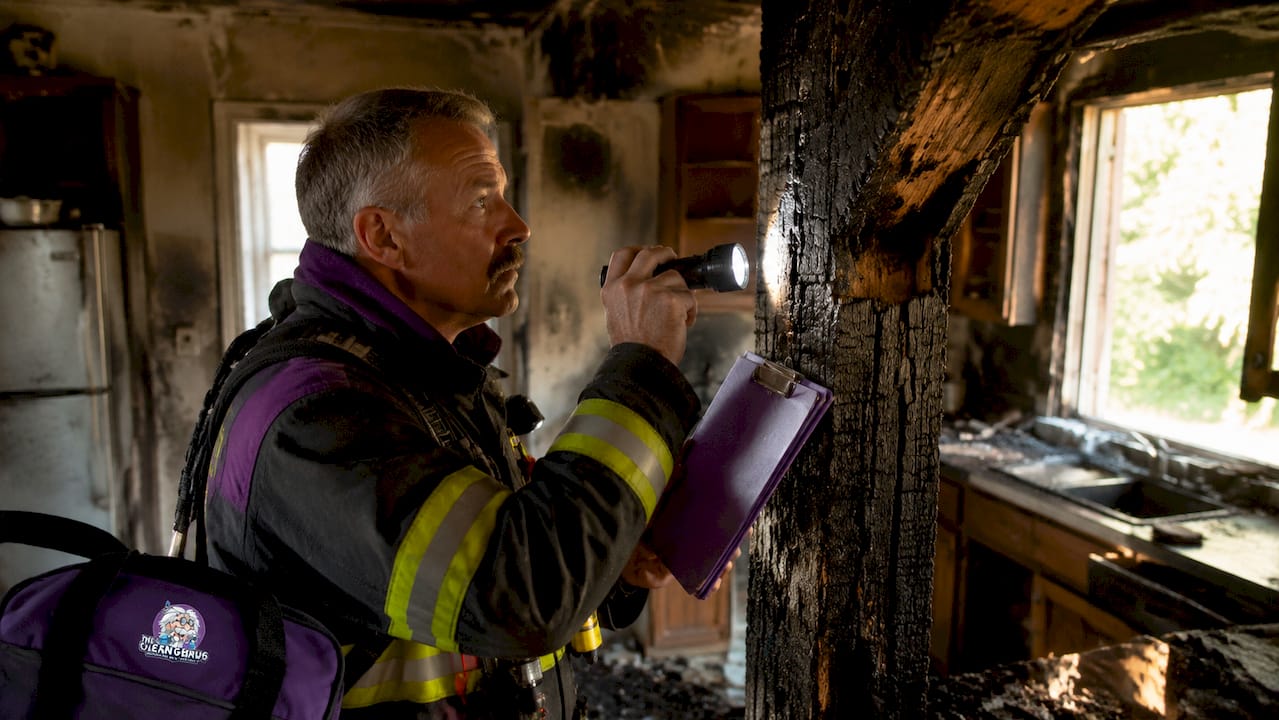
Smoke damage charring is defined as the direct carbonization of a material caused by flame contact during a fire, and it is physically and chemically distinct from the broader contamination that smoke and soot create throughout a structure. Understanding what is smoke damage charring explained correctly matters because charring signals localized structural failure, while smoke damage effects spread silently through walls, HVAC systems, and porous surfaces far beyond the burn zone. Both require professional attention, but they demand different assessment methods and restoration workflows. Getting this distinction right is the first step toward protecting your home and your family’s health.
What is smoke damage charring, and how does it differ from soot?
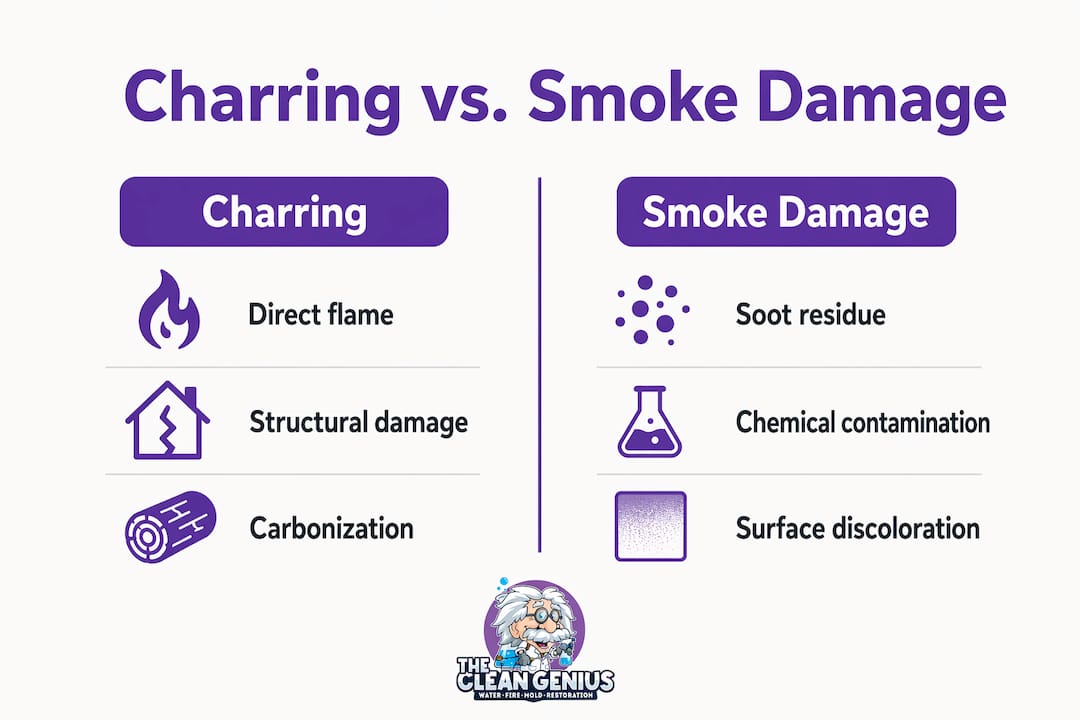
Charring is localized carbonization of a material caused by direct flame contact. Smoke damage, by contrast, is a widespread contamination problem driven by airborne particles, gases, and residues that travel far from the fire’s origin. Restoration professionals use char depth to evaluate structural damage, while smoke assessment maps how particles and residues have migrated through the building.
Soot is a third category that homeowners often confuse with both. Soot is the black, powdery residue left by incomplete combustion. It settles on surfaces, but it also travels through HVAC systems and wall cracks, reaching rooms that never saw a flame. Smoke is the migration problem. Soot is the residue problem. Charring is the structural problem.
Here is how the three differ in practical terms:
- Charring: Burned, blackened, and brittle material at or near the fire source. Structural integrity is compromised. Requires removal or replacement.
- Smoke contamination: Invisible gases and fine particles that penetrate porous materials, fabrics, and HVAC ducts. Causes odor, discoloration, and chemical damage across the entire structure.
- Soot: Visible black residue that settles on surfaces. Acidic in nature. Causes etching and staining if not neutralized quickly.
Smoke from modern structure fires contains polycyclic aromatic hydrocarbons at levels roughly 10 times normal and industrial compounds at 4.8–13 times urban background levels. That means the air inside a fire-damaged home carries far more toxic load than most homeowners realize. Volatile organic compounds (VOCs), PFAS, and toxic metals smaller than 100 nanometers penetrate deep into lung tissue.
Pro Tip: Never assume a room is safe because it looks clean. Smoke gases are invisible, and VOCs can saturate drywall, insulation, and wood without leaving a visible mark.
How does charring from smoke damage affect your home’s structure and safety?
Charring compromises the structural integrity of wood framing, floor joists, and load-bearing elements. The depth of char tells a restoration engineer how far heat penetrated the material and whether the member can remain in place or must be replaced. Shallow surface charring may allow for cleaning and sealing. Deep charring through a joist or stud requires full removal.
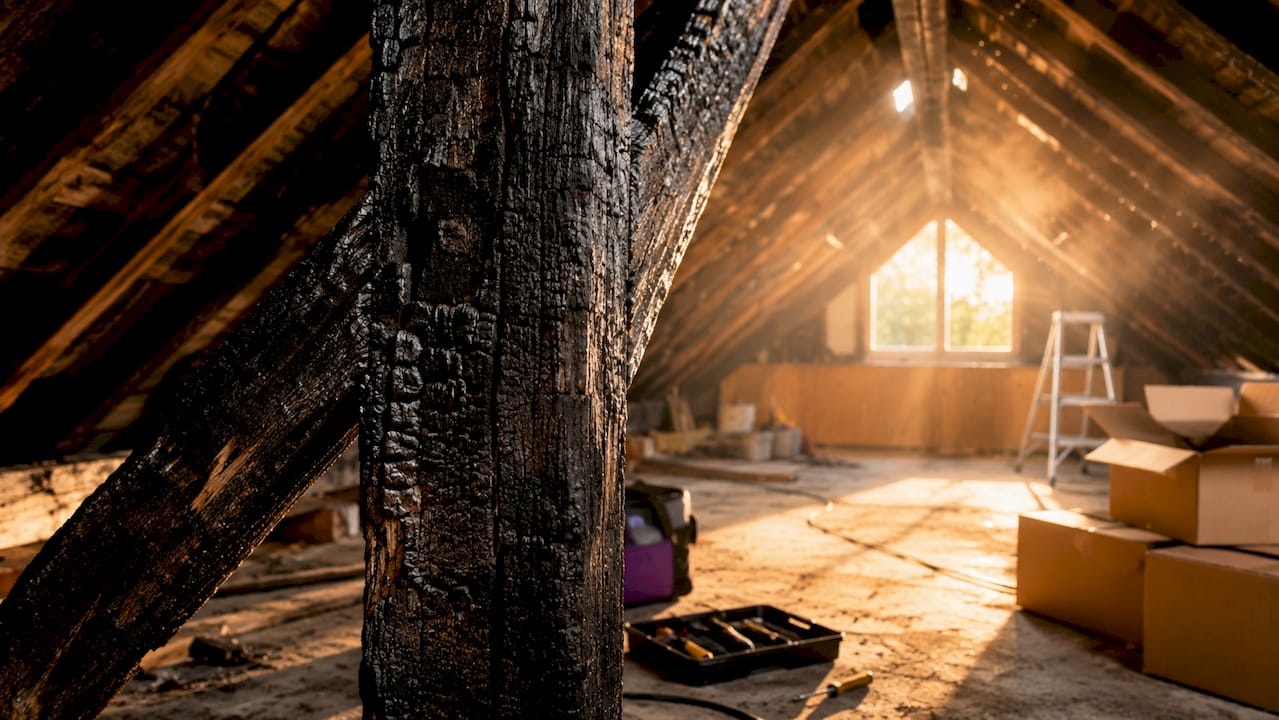
Smoke residues cause a separate and ongoing problem. Acidic gases etch metal, degrade varnishes, and discolor surfaces even after the fire is out. This chemical etching continues for hours or days post-fire, meaning a home that looks stable is still being actively damaged at the molecular level. Copper pipes, electrical contacts, and appliance finishes are particularly vulnerable.
| Material | Charring effect | Smoke/soot effect |
|---|---|---|
| Wood framing | Carbonization, structural weakening | Odor absorption, surface staining |
| Drywall | Surface burn, crumbling | Deep soot penetration, discoloration |
| Metal surfaces | Warping near flame | Acidic etching, corrosion |
| Fabrics and insulation | Direct burn damage | VOC absorption, persistent odor |
| HVAC components | Rare unless fire is near unit | Soot coating, contamination spread |
Health risks compound the structural ones. Smoke damage causes respiratory issues, eye and skin irritation, coughing, headaches, and worsening of asthma or COPD. Hazardous dust, ash, and chemicals can linger for months or even years in porous materials without professional remediation. That timeline is not a warning to take lightly.
Pro Tip: If anyone in your household has asthma, COPD, or a compromised immune system, do not re-enter a fire-damaged home until a certified restoration professional has completed an air quality assessment.
How do you identify and assess charring and smoke damage in your home?
Identifying charring is straightforward visually. Charred material is blackened, brittle, and often crumbling at the edges. It appears at or near the fire’s origin point. Smoke staining looks different: it shows up as gray or yellow discoloration on walls and ceilings, often in rooms far from the fire, and carries a persistent burnt odor.
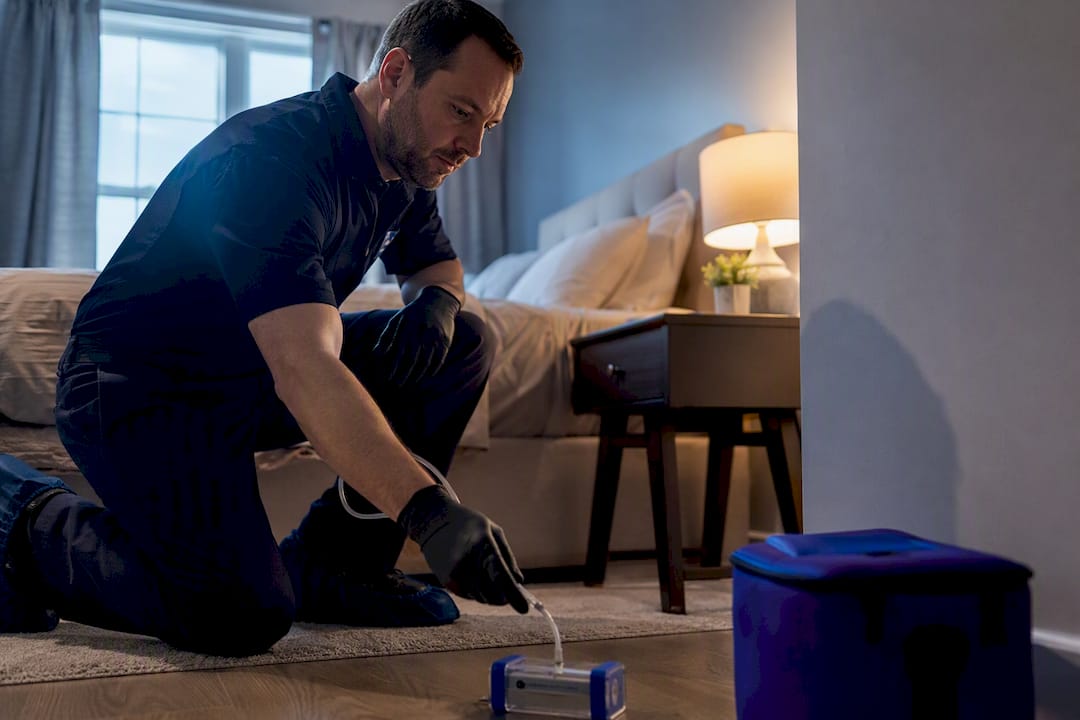
Professional assessment goes well beyond what you can see. Certified fire and smoke damage assessors use specialized testing for soot particle density, VOC concentration, and acidic residue levels. They also map contamination pathways through the HVAC system, wall cavities, and subfloor gaps. This mapping determines the true scope of remediation needed.
Follow these steps when you suspect smoke or char damage:
- Do not re-enter until cleared. Fire departments and structural engineers must confirm the building is safe before you go back inside.
- Document everything visually. Photograph all visible charring, staining, and damage for your insurance claim before any cleaning begins.
- Call a certified restoration professional. Request a formal fire and smoke damage assessment, not just a visual walk-through.
- Ask for air quality testing. VOC and particulate testing reveals hidden contamination that visual inspection misses.
- Identify HVAC exposure. If the system ran during or after the fire, assume contamination has spread throughout every duct and vent.
- Avoid DIY cleaning at this stage. Disturbing soot before containment is established spreads contamination further.
Cleaning without proper knowledge can embed soot deeper into porous materials or aerosolize toxic particles. The assessment phase exists to prevent that mistake. A professional assessment also produces documentation your insurance company requires to process a claim accurately.
What steps effectively remediate and restore smoke damage charring?
Char damage requires removal or demolition. There is no cleaning method that restores carbonized wood or drywall to structural soundness. Once a material is charred through, it comes out. Smoke damage cleanup is more complex because it involves tracking contamination, chemical testing, and specialized cleaning across the entire structure.
Professional smoke damage restoration follows a defined workflow:
- Containment first. Restoration crews establish negative air pressure zones to prevent soot from spreading during cleanup. Plastic sheeting seals off unaffected areas.
- HEPA air scrubbing. Industrial HEPA air scrubbers run continuously to capture airborne particles. Standard home vacuums lack HEPA filtration and aerosolize toxic soot particles instead of capturing them.
- Chemical cleaning and neutralization. Acidic soot residues require alkaline cleaning agents to neutralize the ongoing chemical damage. General-purpose cleaners do not accomplish this.
- Media blasting. For charred wood that can be retained structurally, dry ice blasting or soda blasting removes surface char and soot without damaging the underlying material.
- HVAC cleaning. Every duct, vent, and air handler exposed to smoke requires professional cleaning. Skipping this step means contamination recirculates every time the system runs.
- Deodorization. Techniques like thermal fogging and ozone treatment penetrate porous materials to neutralize odor compounds at the molecular level. Surface sprays do not reach embedded VOCs.
- Contents restoration. Furniture, clothing, and personal items require specialized cleaning. The restoration of smoke-affected belongings is a separate discipline from structural remediation.
Speed matters throughout this process. Smoke damage continues chemically for hours or days after the fire, meaning every hour of delay allows more etching, more absorption, and more permanent damage. The fire damage cleanup timeline directly affects how much of your home and belongings can be saved.
The most common DIY mistake is painting over smoke-stained walls. Paint does not seal in odor or neutralize acidic residues. The smell returns within weeks, and the underlying chemical damage continues beneath the surface.
Key Takeaways
Charring signals direct structural damage from flame contact, while smoke contamination spreads chemical and health hazards throughout the entire structure, requiring separate assessment and remediation strategies.
| Point | Details |
|---|---|
| Charring vs. smoke damage | Charring is localized structural carbonization; smoke damage is widespread chemical contamination requiring different remediation. |
| Ongoing chemical damage | Acidic smoke residues continue etching surfaces for hours after the fire, making rapid professional response critical. |
| Health risks are real | VOCs, soot particles, and toxic metals in smoke can linger in porous materials for months without professional cleanup. |
| Never use standard vacuums | Home vacuums aerosolize toxic soot particles; only HEPA-equipped professional equipment safely removes residues. |
| Professional assessment is non-negotiable | Air quality testing and contamination mapping reveal damage that visual inspection alone cannot detect. |
What I’ve learned from years of smoke damage calls
The call I get most often goes something like this: a homeowner had a kitchen fire, the flames are out, the room looks manageable, and they want to know if they can just clean it up themselves. My honest answer is always the same. What you see is not what you have.
Charring is the obvious part. It tells you where the fire was and how hot it burned. But the smoke that traveled through your home while that fire burned is the part that will cost you the most if you ignore it. I’ve walked into bedrooms two floors above a basement fire where the drywall tested positive for VOCs and the HVAC had distributed soot to every room. None of it was visible to the eye.
The other misconception I see constantly is that odor is the main problem. Homeowners buy ozone machines or spray deodorizers and think the job is done when the smell fades. Odor is a symptom. The acidic residues causing ongoing material degradation have no smell you can detect. Neutralizing them requires chemical testing and targeted treatment, not air freshener.
My strongest advice: get a professional assessment before you touch anything. The fire damage restoration process exists because the sequence of steps matters. Containment before cleaning. Testing before treatment. Removal before rebuilding. Skipping steps does not save time. It creates problems that cost far more to fix later.
— Jim
Thecleangenius fire and smoke damage restoration services
Smoke and char damage require a response that goes beyond surface cleaning. Thecleangenius serves Chicagoland homeowners and property managers with certified fire and smoke damage restoration, covering everything from initial assessment and air quality testing to soot removal, structural drying, deodorization, and contents restoration.

The team at Thecleangenius brings over 25 years of combined experience and more than 400 five-star reviews to every job. Whether you are dealing with visible charring, hidden smoke contamination, or persistent odor that keeps coming back, the fire damage soot removal process starts with a thorough professional assessment. Thecleangenius is available 24/7 for emergency response across Arlington Heights, Naperville, Schaumburg, Wheaton, and the greater Chicagoland area. Contact the team today to schedule your assessment and get a clear picture of what your home actually needs.
FAQ
What is charring in smoke damage?
Charring is the direct carbonization of a material caused by flame contact during a fire. It is a localized structural problem, distinct from the widespread chemical contamination that smoke and soot create throughout a building.
Can smoke damage continue after the fire is out?
Yes. Acidic gases in smoke continue to etch metal, degrade varnishes, and damage porous materials for hours or days after the fire is extinguished. Rapid professional intervention limits this ongoing chemical damage.
Is it safe to clean smoke damage yourself?
Standard home vacuums aerosolize toxic soot particles rather than capturing them, which spreads contamination and worsens air quality. Professional HEPA-equipped equipment and containment strategies are required for safe cleanup.
How far can smoke travel from the fire source?
Smoke and soot travel through HVAC systems, wall cavities, and structural gaps, reaching rooms far from the burn area. A professional assessment maps these contamination pathways to determine the true scope of damage.
How long do smoke damage health risks last?
Hazardous dust, ash, and toxic chemicals can remain embedded in porous materials for months or years without professional remediation, continuing to pose respiratory and health risks to occupants.