
The fire restoration timeline for homeowners spans from a single day of emergency stabilization to six months or more of full structural rebuild, depending entirely on how much the fire destroyed. Most residential jobs fall somewhere between two and eight weeks, but severe structural damage can push that figure past a year. Knowing what each phase looks like, and how long it realistically takes, is the difference between managing your recovery confidently and feeling blindsided at every turn. This guide walks you through every stage of the fire damage recovery process, from the first 24 hours to the final walkthrough.
What are the typical phases of the fire restoration timeline?
The fire restoration timeline for homeowners follows a predictable sequence, even when the duration varies. Restoration typically takes 2 to 8 weeks for most residential fires, with smaller events wrapping in one to two weeks and larger fires stretching two to four months or beyond. That range exists because each phase depends on the one before it. You cannot begin reconstruction until drying is complete. You cannot begin drying until the insurance adjuster has documented the damage.
Here is how the phases map to realistic timeframes:
| Damage severity | Expected timeline |
|---|---|
| Minor smoke damage, no structural loss | 1 to 3 weeks |
| Moderate single-room fire | 1 to 3 months |
| Significant multi-room fire | 3 to 6 months |
| Severe structural damage | 6 to 12+ months |
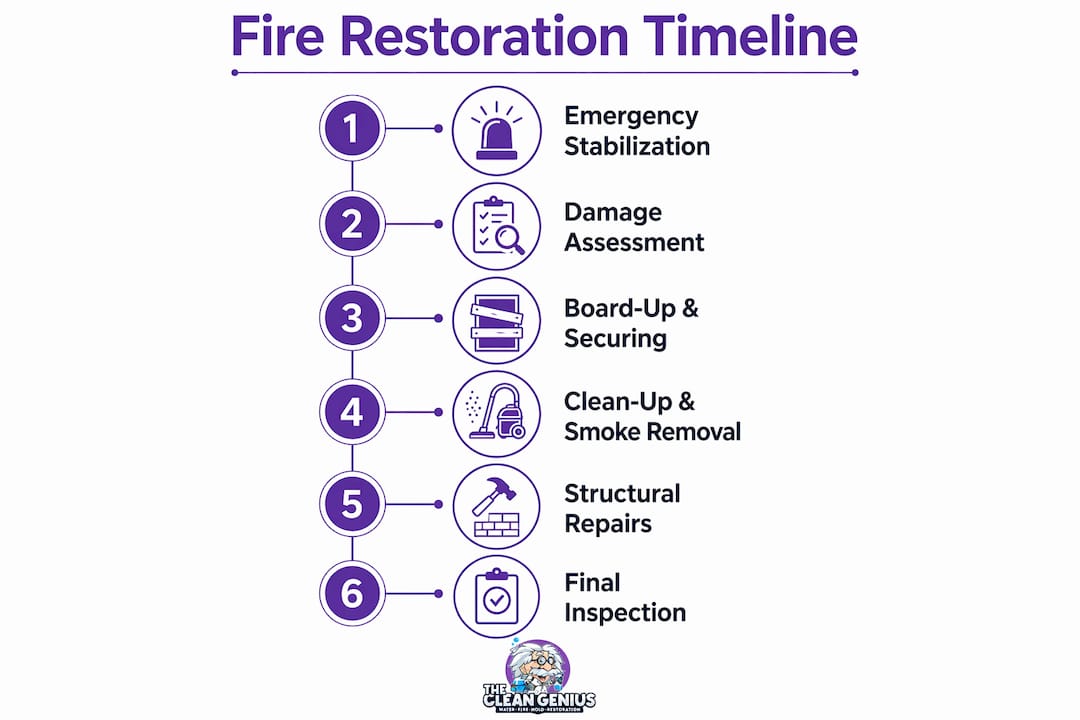
The phases themselves break down as follows. Emergency stabilization and board-up happen within the first 24 to 48 hours after fire department clearance. Adjuster inspections and damage documentation fill the first two weeks. Water extraction, drying, and debris removal run from weeks two through four. Smoke and soot cleaning, plus odor neutralization, overlap with mitigation and can last several days to several weeks. Reconstruction, including framing, drywall, flooring, and finishes, begins after all prior phases clear and can run from four weeks to four months or more.
Pro Tip: Write down the date and time of every contractor visit, adjuster call, and permit submission. This log becomes your single most useful tool if disputes arise over delays or scope changes.
How does fire severity affect how long restoration takes?
Fire severity is the primary variable in the home fire rebuild timeline, but it is not the only one. Minor smoke damage confined to one room can be cleaned with minimal structural repairs, often within two to three weeks. The moment fire burns through walls, ceilings, or the roof, you are looking at permit-based reconstruction that adds months to the schedule.
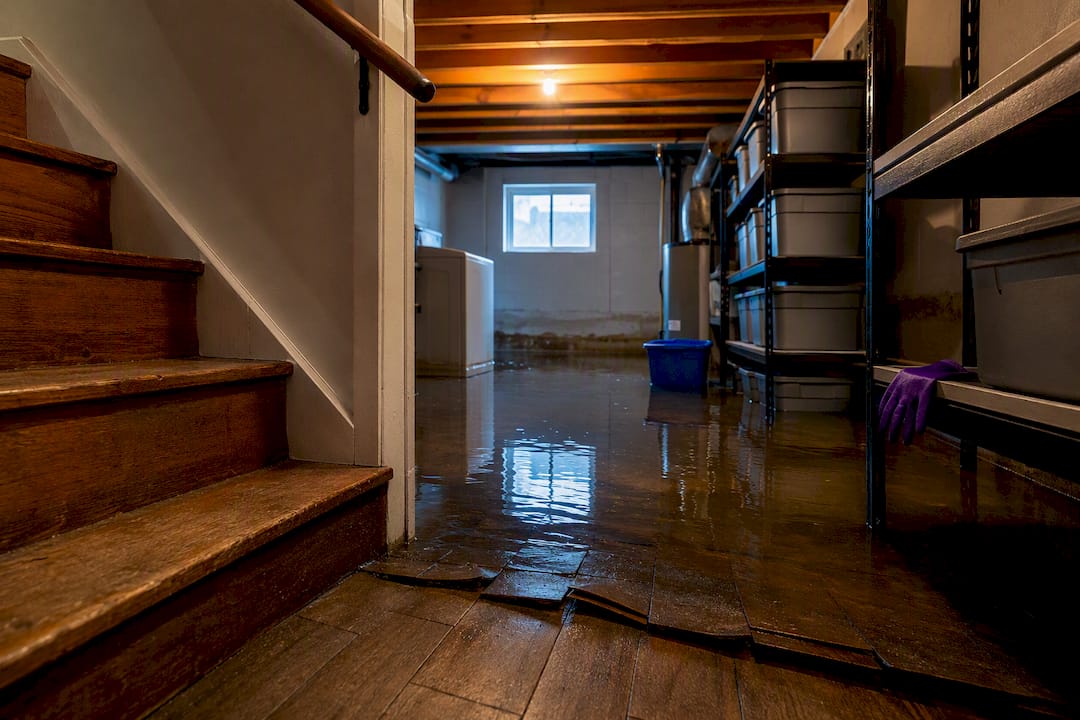
Water damage from firefighting efforts creates a separate urgency. Drying typically takes 3 to 7 days, and the window to prevent mold growth is roughly 72 hours after water exposure. A fire that triggers significant hose use can generate as much secondary water damage as a burst pipe, which means the mitigation phase carries the same time pressure as the fire damage itself. You can read more about managing that specific risk in this guide to emergency water damage response.
Several factors beyond visible damage affect the total duration:
- Hidden damage: Smoke penetrates wall cavities, HVAC systems, and insulation. Cleaning these areas takes longer than surface work.
- Structural permits: Any load-bearing repair requires a permit, and permit approval timelines vary by municipality across Chicagoland.
- Material availability: Specialty flooring, custom cabinetry, or discontinued fixtures can add weeks to the rebuild phase.
- Insurance documentation: Incomplete or disputed documentation stalls every downstream phase.
- Contractor scheduling: Certified restoration crews are in high demand after widespread weather events or busy seasons.
Pro Tip: Ask your restoration contractor to identify hidden damage zones, specifically inside HVAC ducts and wall cavities, before finalizing the scope. Discovering these areas late adds cost and time.
What should homeowners expect at each step of the restoration process?
The fire damage recovery process is sequential by design. Skipping or rushing any step creates problems that surface later, often as persistent odors, hidden moisture, or failed inspections. Here is what each window looks like in practice.
-
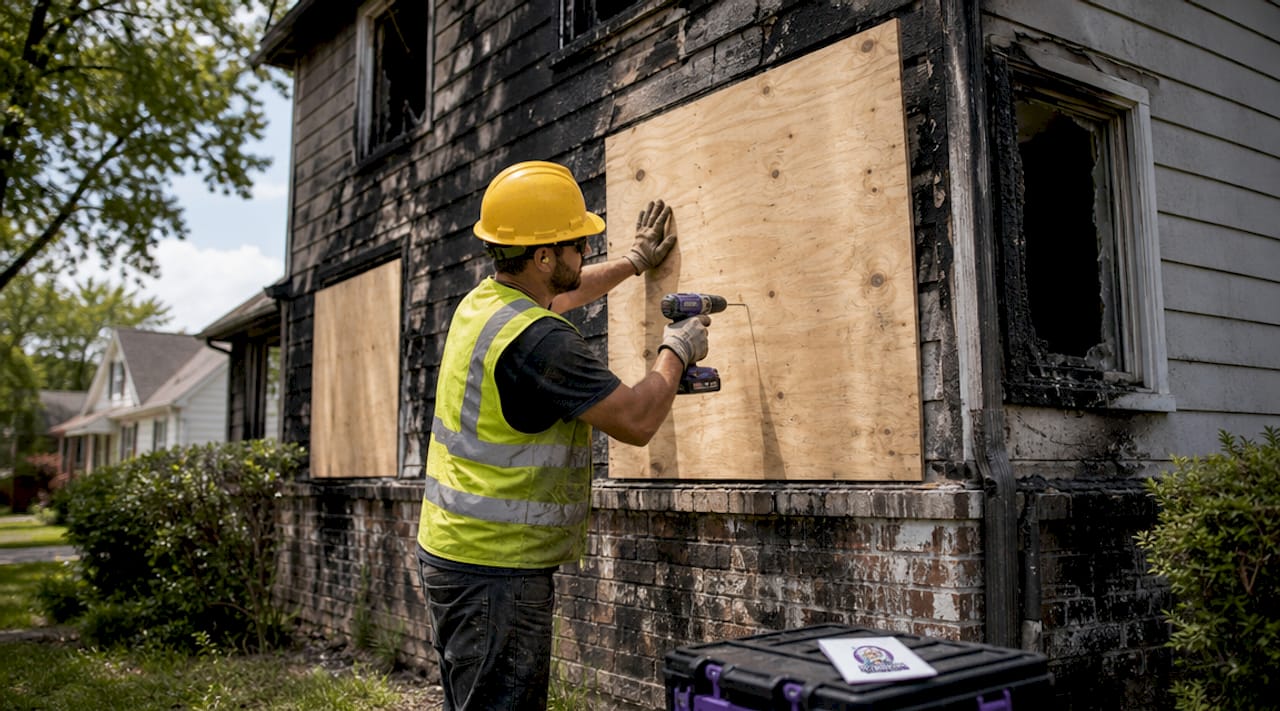
Days 1 to 3. The fire department issues clearance, typically within 24 to 48 hours, though re-entry may be delayed due to structural instability or toxic residues. A restoration company boards up windows, tarps the roof, and secures the structure against weather and unauthorized entry.
-
Week 1 to 2. Your insurance adjuster inspects and documents all damage. This window is critical. Premature demolition can jeopardize your insurance claim and force renegotiation, which adds weeks to the project. Scope development and permit applications also begin here.
-
Weeks 2 to 4. Water extraction and structural drying run concurrently with debris removal. Proper sequencing of drying before reconstruction prevents hidden moisture from causing mold or structural failures later. Industrial dehumidifiers and air movers typically run for three to seven days before moisture readings confirm the structure is dry.
-
Weeks 3 to 6+. Soot and smoke cleaning covers every affected surface, including walls, ceilings, contents, and HVAC components. Odor neutralization uses treatments like thermal fogging and hydroxyl generators, with interim evaluations to confirm progress. For detailed guidance on this phase, the soot removal best practices page covers the process thoroughly.
-
Weeks 4 to 16+. Reconstruction begins once all cleaning and drying phases pass inspection. Framing, insulation, drywall, flooring, painting, and finish work proceed in sequence. The timeline here depends on the scope of structural damage and permit approval speed.
-
Final phase. A post-restoration evaluation confirms all objectives are met. This evaluation involves the homeowner directly, with documentation review and a site walkthrough before you move back in.
Pro Tip: Do not authorize demolition until your adjuster has completed and signed off on the full damage documentation. Photographing every damaged area yourself, before any work begins, gives you an independent record.
What common delays extend the fire damage repair timeline?
Delays in the fire restoration steps for homeowners rarely come from the physical work itself. They come from the administrative and logistical layers surrounding it. Understanding where delays originate helps you push back on them before they compound.
Insurance adjuster delays and incomplete documentation are the most common cause of stalled timelines. When adjusters are backlogged or when initial estimates are disputed, demolition and reconstruction cannot proceed. Some homeowners wait two to three weeks just to get a signed scope of work.
Permit approval adds another variable. In municipalities across the Chicago suburbs, including Naperville, Schaumburg, and Arlington Heights, permit timelines for structural repairs can range from a few days to several weeks depending on the jurisdiction and current workload.
Secondary damage risks compound when mitigation is delayed. Mold growth begins within 72 hours of water exposure. Soot residue penetrates porous surfaces more deeply over time, making cleaning harder and more expensive. Odors that are not addressed promptly become embedded in structural materials, requiring more aggressive treatment.
Additional delay sources include:
- Weather: Exterior repairs, roof work, and board-up effectiveness all depend on conditions.
- Contractor availability: Specialized crews for fire and smoke restoration are not interchangeable with general contractors.
- Material lead times: Supply chain delays on specific materials can hold up final reconstruction phases.
- Homeowner decision lag: Delays in selecting finishes, approving scopes, or responding to contractor questions add days or weeks to the schedule.
How can homeowners manage their restoration timeline effectively?
The first 24 to 72 hours post-fire are the most consequential for limiting total restoration time and cost. Calling a certified restoration company immediately, before contacting anyone else, sets the sequence in motion correctly. The restoration company can coordinate directly with your insurance carrier, which removes one major source of delay.
Effective timeline management comes down to a few consistent behaviors:
- Document everything yourself. Take photos and video of every room before any work begins. Back them up to cloud storage immediately.
- Communicate in writing. Email or text your adjuster and project manager after every conversation. Written records prevent misunderstandings that cause rework.
- Understand the sequence. Ask your restoration contractor to explain why each phase must precede the next. Homeowners who understand sequencing are far less likely to pressure crews into skipping steps.
- Verify odor clearance scientifically. Professional restoration companies treat odor verification as a measurable process, not a subjective judgment. Confirm that your contractor uses interim and final odor evaluations before signing off on the cleaning phase.
- Set realistic expectations. A moderate fire in a single room realistically takes one to three months from clearance to move-in. Planning your temporary housing and finances around that range prevents stress-driven decisions that extend the timeline.
Pro Tip: Choose a restoration company that has direct experience with local permitting offices in your area. A contractor who knows the Wheaton or Elk Grove Village permit process will navigate approvals faster than one who does not.
Key takeaways
The fire restoration timeline is controlled by sequencing, documentation, and damage severity. Rushing any phase or delaying insurance coordination extends the total recovery time.
| Point | Details |
|---|---|
| Timeline ranges by severity | Minor fires resolve in 1 to 3 weeks; severe structural damage takes 6 to 12+ months. |
| First 72 hours are critical | Water from firefighting must be dried within 72 hours to prevent mold and secondary damage. |
| Documentation before demolition | Premature debris removal can void insurance claims and force costly renegotiation. |
| Sequencing prevents rework | Drying must precede reconstruction to avoid hidden moisture and persistent odor failures. |
| Delays are mostly administrative | Insurance, permits, and contractor scheduling cause more delays than the physical restoration work itself. |
What I have learned from watching homeowners navigate fire recovery
After working through fire damage cases across Chicagoland, the pattern I see most often is this: homeowners who struggle the longest are the ones who underestimated how much of the timeline is invisible. They expected to see progress every day in the form of hammers and drywall. What they got instead was two weeks of waiting for an adjuster, followed by a week of drying equipment humming in empty rooms. That gap between expectation and reality is where frustration turns into bad decisions.
The worst outcomes I have witnessed came from homeowners who pressured crews to skip drying or start reconstruction before documentation was complete. In one case, a family moved back into a partially rebuilt home only to discover persistent smoke odor six months later because the HVAC system had never been properly cleaned. Fixing it required reopening walls and restarting the odor treatment process from scratch. The shortcut cost them more time than the original process would have.
What actually works is treating the restoration like a project with dependencies, not a renovation you can accelerate by throwing more people at it. Stay assertive with your adjuster about response times. Ask your project manager for a written schedule with phase milestones. And do not sign off on the final walkthrough until odor clearance has been verified under normal living conditions, with windows closed and HVAC running, exactly as described in the post-restoration evaluation process. That final check is the one most homeowners skip, and it is the one they most regret skipping.
— Jim
How Thecleangenius helps you move through fire restoration faster
Thecleangenius responds to fire damage emergencies 24 hours a day, 7 days a week, across the greater Chicagoland area, including Naperville, Schaumburg, Arlington Heights, and Wheaton. With over 25 years of combined experience and more than 400 five-star reviews, the team handles every phase of the fire damage recovery process, from emergency board-up and water extraction through soot removal, odor neutralization, and full reconstruction coordination.

Working directly with your insurance carrier, Thecleangenius reduces the documentation and coordination delays that extend most timelines. If you want a clear picture of what the process looks like from start to finish, the fire damage restoration process page walks through every phase in detail. Call or contact Thecleangenius today to get certified professionals on-site fast and keep your recovery on schedule.
FAQ
How long does fire restoration typically take?
Most residential fire restoration jobs take 2 to 8 weeks, with minor smoke damage resolving in one to three weeks and severe structural fires requiring six months to over a year.
When can I re-enter my home after a fire?
Re-entry requires official clearance from the fire department or fire marshal, which typically takes 24 to 48 hours but can extend longer when structural instability or toxic residues are present.
What slows down the fire restoration timeline the most?
Insurance adjuster delays, incomplete documentation, and permit approval processes are the most common causes of extended timelines, often adding weeks before physical restoration work can begin.
Does firefighting water damage affect the restoration schedule?
Yes. Water from firefighting must be extracted and dried within 72 hours to prevent mold growth, which adds an urgent mitigation phase that runs parallel to fire damage cleanup and extends the overall schedule by one to two weeks.
What is the final step before moving back in?
The post-restoration evaluation is a structured walkthrough with the homeowner and restoration team to confirm odor clearance, moisture readings, and all restoration objectives have been met before occupancy resumes.