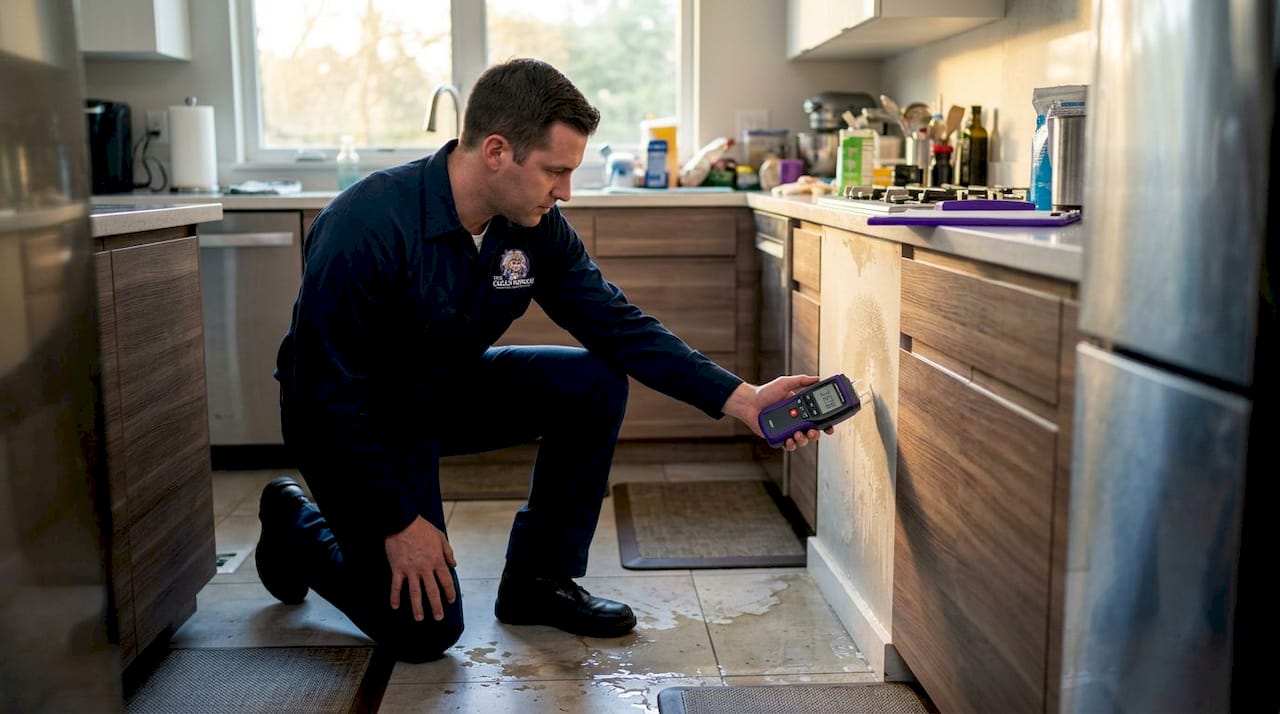

Certified restorers are trained professionals who apply science-based, standardized methods to recover water-damaged properties and protect homeowners from hidden long-term damage. The role of certified restorers in water damage situations goes far beyond running fans and extracting water. These specialists, credentialed through organizations like the IICRC, use controlled drying science, moisture mapping, and microbial risk management to verify that a property is genuinely dry, not just visually dry. If you are dealing with a flood, burst pipe, or sewage backup in your Chicagoland home, understanding what certified restorers actually do will help you make a faster, smarter decision.
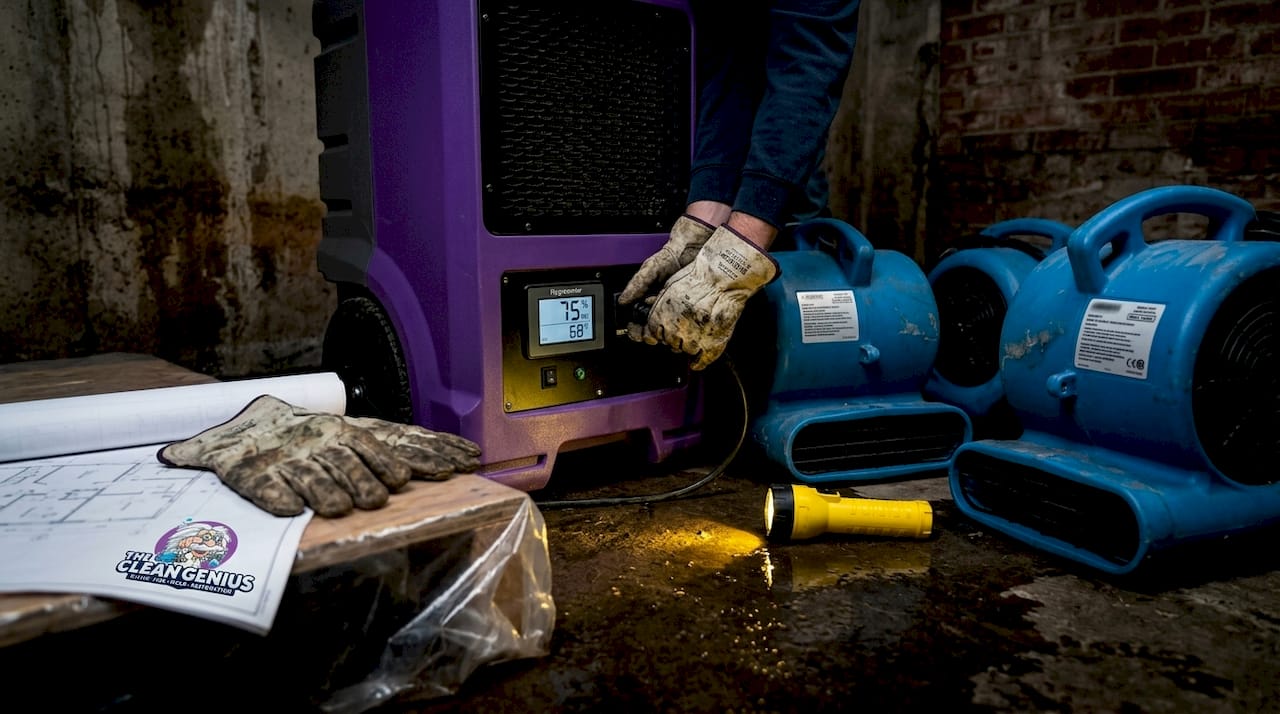
What do certified restorers do during water damage restoration?
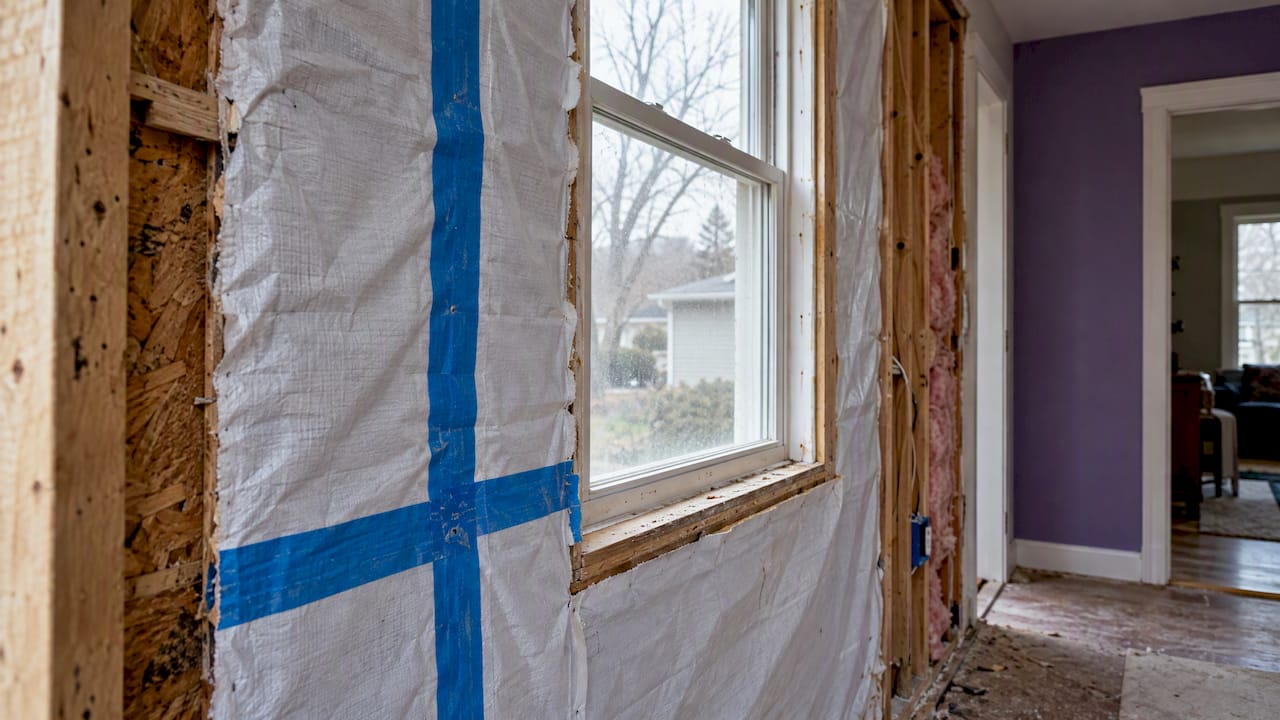
Certified restorers follow a structured, documented process from the moment they arrive at your home. Every step is designed to prevent secondary damage, including mold growth, structural weakening, and air quality problems. Here is what that process looks like in practice:
- Initial damage assessment. Restorers classify the water source (clean, gray, or black water) and categorize the extent of saturation. This determines which safety protocols and drying strategies apply.
- Water extraction. Truck-mounted and portable extractors remove standing water from floors, carpets, and wall cavities before any drying begins.
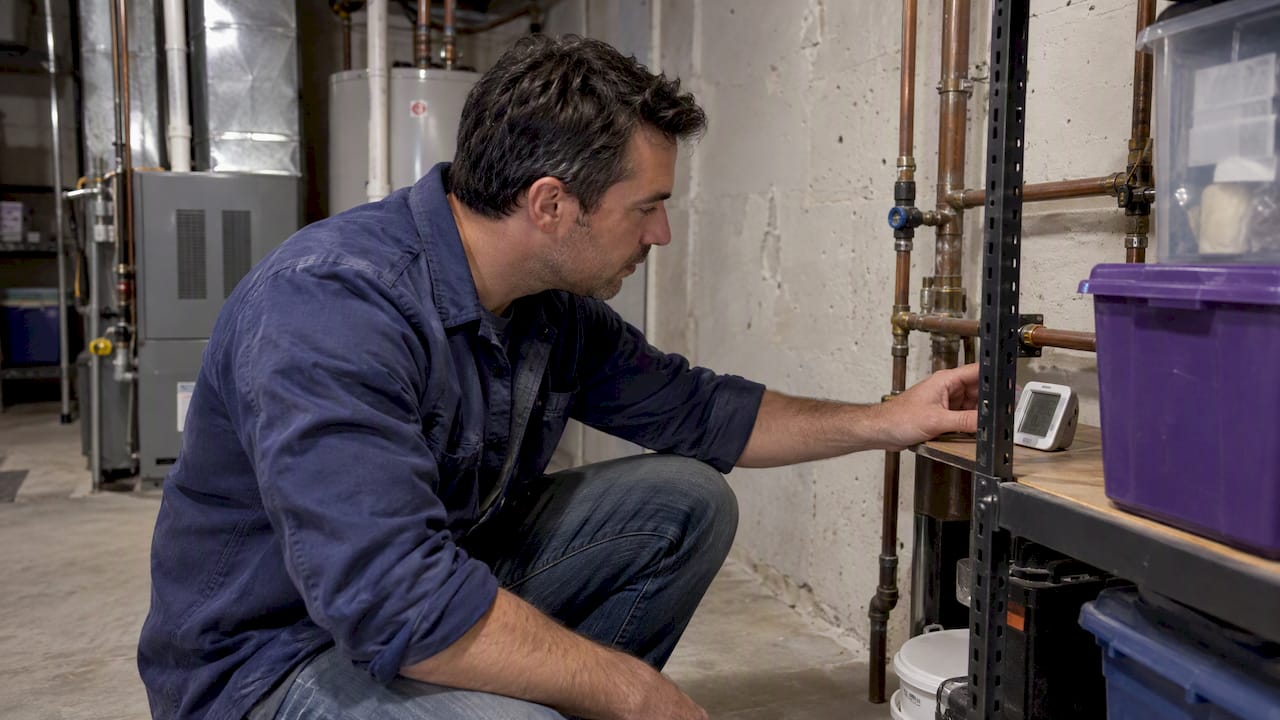
- Moisture mapping. Technicians take baseline readings across all affected and unaffected materials using moisture meters and thermal imaging cameras. These readings establish the starting point for drying targets.
- Controlled structural drying. Certified restorers apply psychrometrics, the science of air, heat, and moisture, to calculate the right number and placement of air movers and dehumidifiers. Equipment runtime alone is not a valid measure of drying progress.
- Daily documentation. Readings are recorded every day, covering material moisture content, temperature, relative humidity, and dew point. This data proves the drying is working and protects you during insurance review.
- Microbial risk management. Technicians apply EPA-registered antimicrobials to surfaces at risk of mold colonization and monitor for signs of growth throughout the project.
- Cleaning, disinfection, and repairs. Once materials reach drying targets, restorers clean and sanitize affected areas, then coordinate or perform structural repairs.
Pro Tip: Ask your restorer to show you the daily moisture logs before the job closes. If they cannot produce them, that is a red flag regardless of what their business card says.
Why does certification matter for homeowners after water damage?
Certification is not a marketing badge. The IICRC is a globally recognized non-profit that sets the technical standards restoration professionals must meet, and it requires ongoing education to maintain credentials. That means a certified technician is not just trained once. They stay current with updated science and standards.
The practical benefit for you as a homeowner is significant. Certified technicians understand that drying is a physics problem requiring measured-to-target metrics, not guesswork. A non-certified crew may pull equipment after three days because the floor looks dry. A certified restorer will not close a job until moisture readings in the wall assembly, subfloor, and framing match pre-loss baselines.
There are three specific protections certification gives you:
- Hidden moisture detection. Walls and subfloors can hold moisture long after surfaces feel dry. Certified restorers use penetrating and non-penetrating meters to find it.
- Insurance documentation. Defensible drying records created by certified restorers survive adjuster review and reduce claim disputes.
- Mold risk reduction. Hidden moisture fuels mold growth weeks or months after the initial incident. Certified teams address this risk during mitigation, not after the damage is done.
Before hiring any restoration firm, verify credentials directly at iicrc.org. Logos on a van are not the same as a verified firm number in the public directory.
What types of water damage restoration certifications exist?
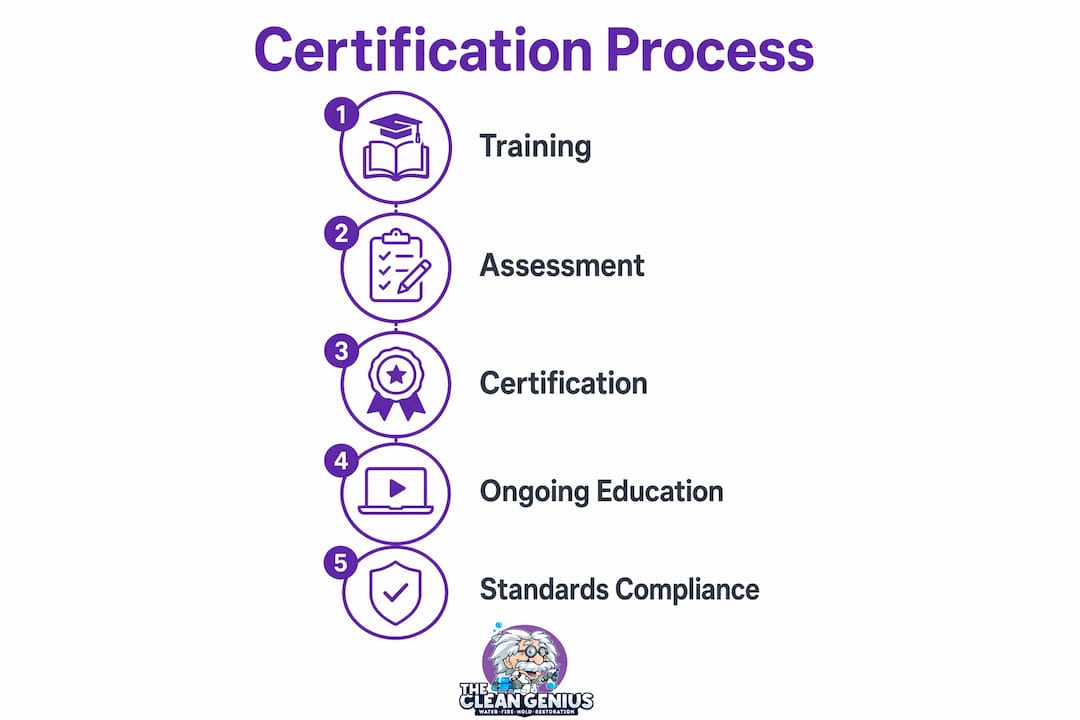
Understanding the types of water restoration certifications helps you evaluate who is actually qualified to work in your home. The IICRC offers several credentials, each covering a specific scope of work.
| Certification | Full Name | What It Covers |
|---|---|---|
| WRT | Water Restoration Technician | Core water damage mitigation, extraction, and drying principles |
| ASD | Applied Structural Drying | Advanced psychrometrics and structural drying for walls, floors, and cavities |
| AMRT | Applied Microbial Remediation Technician | Mold and microbial remediation, containment, and post-remediation verification |
| FSRT | Fire and Smoke Restoration Technician | Smoke, soot, and odor removal after fire and water combined events |
| Master Water Restorer | Master-level credential | Demonstrates mastery across multiple water restoration disciplines |
The WRT is the baseline credential every technician on a water damage job should hold. The ASD credential is what separates a technician who can run equipment from one who can calculate the correct drying system for a specific structure. If your home has a finished basement or multi-layer flooring, you want an ASD-certified technician on site. The AMRT credential becomes critical when water damage has been present for more than 24 to 48 hours, since mold colonization can begin within that window.
Pro Tip: A firm with a Master Water Restorer on staff signals a higher level of technical oversight. Ask specifically whether the person managing your job holds an ASD or higher credential, not just the crew members.
How do certified restorers verify drying with moisture mapping?
Moisture mapping is the documentation backbone of every professional water damage repair process. It is a continuous chain of evidence from the first hour on site to the final day of drying. Moisture maps require baseline coverage, daily material readings, and final verification to justify drying timelines and scope of work.
Here is why this matters more than most homeowners realize. Visual dryness is not scientific dryness. A hardwood floor can feel firm and look normal while holding 25% moisture content inside the wood fibers. That trapped moisture will cause cupping, warping, and mold growth within weeks. Verifying dryness scientifically through documented measurement is the only way to confirm a job is truly complete.
The 2026 IICRC S500 revision makes this even clearer. Continuous, timestamped records from initial loss through final readings are now a mandatory core requirement, not optional paperwork. This standard update reflects what experienced certified restorers have always known: data protects the homeowner and the contractor.
“Documentation and transparency are services homeowners should expect from certified restorers to ensure trust and verifiable results.”
When a certified restorer hands you a complete moisture map at the end of a job, that document is your proof. It shows your insurer exactly what was wet, how long it took to dry, and that the job met measurable targets. Two-point readings taken at the start and end of a job are not sufficient. Continuous moisture mapping is the industry standard that holds up under scrutiny.
What is the connection between certified restoration and mold prevention?
Mold is the most common and costly consequence of incomplete water damage restoration. Certified restorers address mold risk as part of the water damage mitigation process itself, not as a separate problem that shows up later.
The timeline is tighter than most homeowners expect. Mold can begin colonizing wet materials within 24 to 48 hours under the right temperature and humidity conditions. Certified teams emphasize prevention during mitigation because stopping mold growth before it starts is far less expensive and disruptive than full remediation after the fact.
Certified restorers trained in microbial remediation bring specific practices to every job:
- Containment barriers prevent mold spores from spreading to unaffected areas of the home during work.
- HEPA filtration captures airborne spores that become disturbed during demolition or drying. Learning how HEPA filtration works in mold cleanup explains why standard shop vacuums are never adequate.
- Antimicrobial treatment is applied to at-risk surfaces, particularly in wall cavities and under flooring where airflow is limited.
- Post-remediation verification confirms that mold counts in the treated area have returned to normal levels before containment is removed.
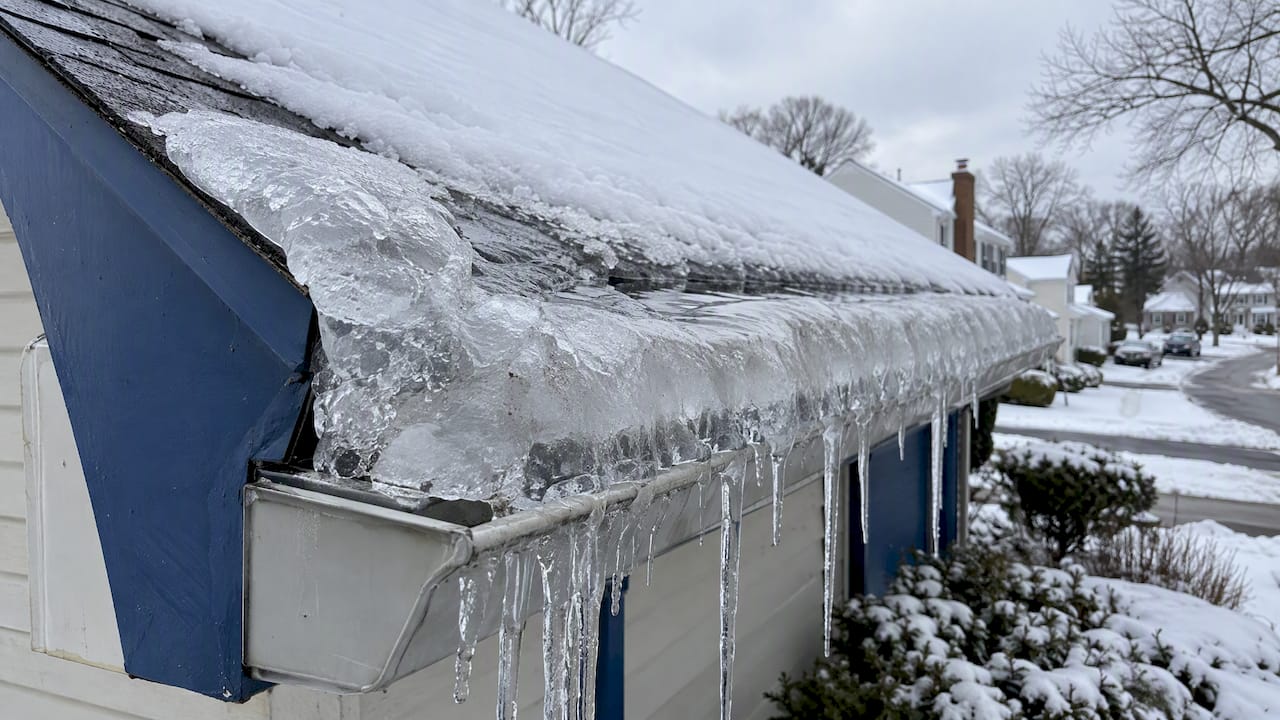
For Chicagoland homeowners, where basement flooding and pipe freezes are seasonal realities, certified mold remediation after water damage is not optional. It is the difference between a home that recovers fully and one that develops a chronic air quality problem.
Key takeaways
Certified restorers are the only professionals equipped to verify that water damage is fully resolved through measured data, not visual checks alone.
| Point | Details |
|---|---|
| Certification signals real standards | IICRC credentials require ongoing education and adherence to documented technical standards, not just a one-time course. |
| Drying is measured, not assumed | Certified restorers use daily psychrometric data and moisture mapping to confirm drying progress against measurable targets. |
| Documentation protects homeowners | Complete moisture logs and drying records are critical for insurance claims and dispute resolution. |
| Mold prevention starts during mitigation | Certified microbial remediation practices stop mold colonization before it starts, saving homeowners significant cost and health risk. |
| Credential verification is your responsibility | Check technician and firm credentials directly at iicrc.org before signing any restoration contract. |
What I have learned after 25 years of water damage work
After more than two decades in restoration, the pattern I see most often is this: homeowners hire the first company that answers the phone, and that company pulls equipment when the floor feels dry. Three weeks later, the homeowner calls back because something smells wrong. By then, mold has colonized the wall cavity, and the remediation cost is double what the original restoration would have been.
The uncomfortable truth about water damage restoration is that the work you cannot see is the work that matters most. Any crew can run a dehumidifier. Only a certified restorer knows how to calculate whether that dehumidifier is the right size for the room’s vapor pressure conditions, and whether it is positioned to actually move moisture out of the wall assembly rather than just the air.
I also see homeowners get burned by firms that carry IICRC logos on their website but cannot produce individual technician certifications on request. The firm certification and the technician certification are different things. Ask for both. If a company hesitates, that tells you everything you need to know. The restoration company selection checklist we put together walks you through exactly what to ask before you hire anyone.
The long-term value of hiring certified professionals is not just a dry home. It is a documented, defensible record that your home was restored to pre-loss condition. That record protects your property value, your health, and your relationship with your insurer.
— Jim
Certified water damage restoration for Chicagoland homeowners
When water damage hits your home, the clock starts immediately. Thecleangenius is a family-owned, IICRC-certified restoration company serving the greater Chicagoland area, including Naperville, Schaumburg, Arlington Heights, and Wheaton, with 24/7 emergency response and over 400 five-star reviews.

Our certified teams handle the full water damage restoration process from extraction and structural drying to moisture mapping and insurance coordination. Every job is documented to 2026 IICRC S500 standards, so your claim is supported by real data. We also provide certified mold removal and remediation using advanced Pure Cloud dry-fog technology for homes where moisture has been present long enough to create microbial risk. Call us any time, day or night, and a certified technician will be on site fast.
FAQ
What is water damage restoration certification?
Water damage restoration certification is a credential issued by organizations like the IICRC that verifies a technician has been trained in standardized methods for water extraction, structural drying, moisture mapping, and mold prevention. The most common entry-level credential is the WRT (Water Restoration Technician).
How do certified restorers differ from uncertified contractors?
Certified restorers use measured drying verification, daily moisture documentation, and psychrometric science to confirm a property is fully dry. Uncertified contractors typically rely on visual checks and equipment runtime, which are not reliable indicators of complete drying.
Why does mold grow after water damage even when the home looks dry?
Mold grows inside wall cavities, under flooring, and in subfloor assemblies where moisture remains trapped even after surfaces feel dry. Hidden moisture can fuel mold growth weeks or months after the initial incident, which is why certified restorers use penetrating moisture meters rather than visual inspection alone.
How do I verify a restorer’s IICRC certification?
Check the public directory at iicrc.org and request both the firm certification number and individual technician credentials. A logo on a website or business card is not the same as a verified, current certification in the IICRC database.
What is the IICRC S500 standard?
The IICRC S500 is the industry standard for professional water damage restoration. The 2026 revision requires continuous, timestamped moisture records from the start of a job through final drying verification, making documentation a mandatory core requirement rather than optional practice.