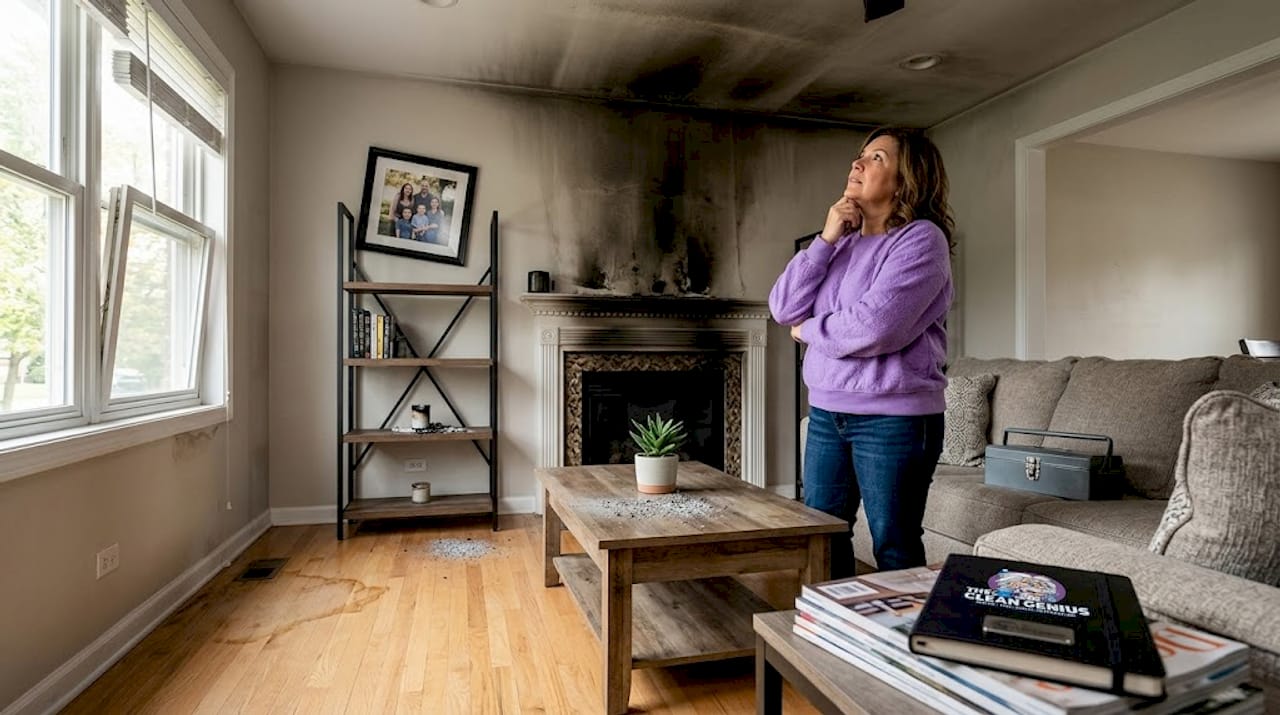

After a house fire, most homeowners want two things: to know when life will get back to normal and to keep their insurance claim moving forward. The trouble is that nobody hands you a clear schedule on the way out of your burning home. Contractors say “a few weeks,” insurers talk about “the adjustment process,” and meanwhile you’re living out of a suitcase in a hotel wondering what’s actually happening at your property. This guide maps every stage of fire damage cleanup from the first 24 hours to the final walkthrough, so you can plan with confidence instead of guessing.
Table of Contents
- What happens immediately after a fire: Assessment and emergency actions
- The fire damage cleanup timeline: From debris removal to deep cleaning
- Insurance coordination: How to stay on track
- Common roadblocks and how to avoid them
- Why most fire cleanup delays are preventable: An expert’s perspective
- Connect with Chicagoland fire cleanup experts for a faster recovery
- Frequently asked questions
Key Takeaways
| Point | Details |
|---|---|
| Plan immediately | Quick assessment and professional help in the first 24 hours prevent major delays. |
| Know each cleanup stage | Understanding debris removal, deep cleaning, and restoration helps you coordinate effectively. |
| Stay proactive with insurance | Regular communication and documentation keep your claim and repairs on track. |
| Avoid common roadblocks | Most delays can be avoided by choosing experienced providers and setting clear expectations. |
What happens immediately after a fire: Assessment and emergency actions
Now that you know why cleanup timing matters, let’s start at the very first hours after a fire.
The first rule after any fire is simple: do not walk back into your home until the fire department clears it as safe for re-entry. Structural damage, weakened floors, smoldering debris, and toxic smoke residue can all turn a “quick look” into a medical emergency. Once you get the all-clear, the clock starts on the restoration process.
Here’s what the first 24 to 48 hours typically look like:
- A certified restoration professional or structural engineer performs a full damage assessment, identifying compromised walls, flooring, and roof areas.
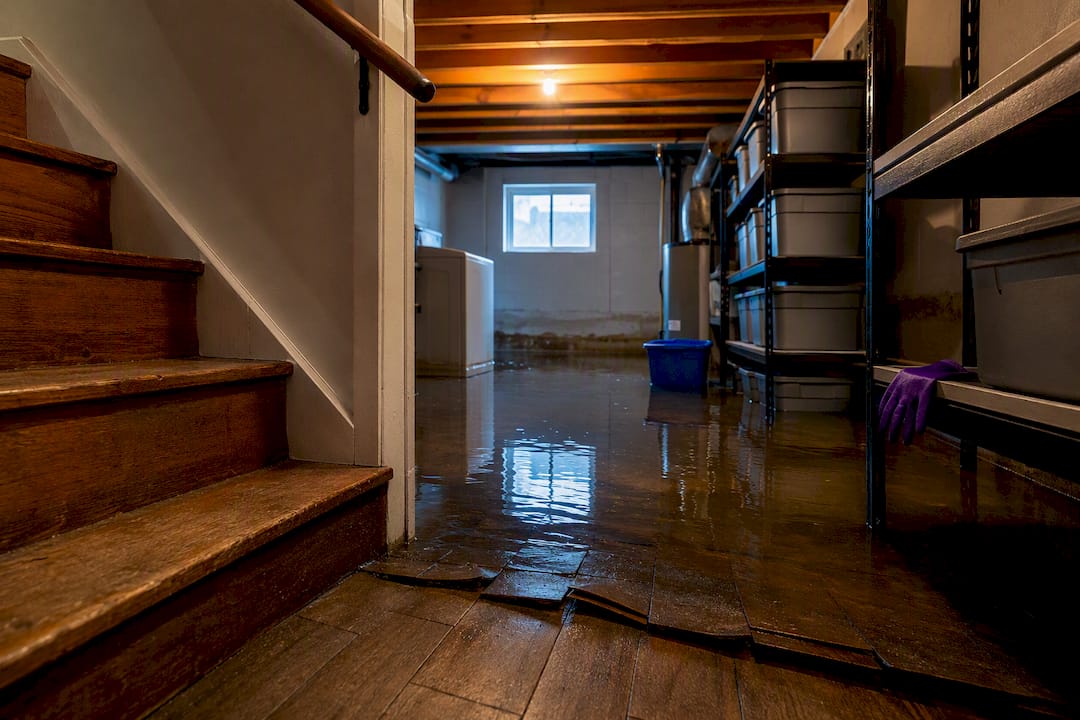
- Firefighting water inside the home must be extracted quickly. Standing water can cause mold growth within 24 to 48 hours, so emergency water extraction is often the first service called after the fire trucks leave.
- Board-up and tarping services protect the home from weather, theft, and further water intrusion while full repairs are planned.
- Utilities like gas and electricity are often shut off by the responding fire department and need a licensed inspection before being restored.
- Air quality is assessed because smoke particles and carbon residue can linger in HVAC systems and spread through the entire house.
- Hazardous materials like asbestos or lead paint disturbed by the fire must be flagged before any debris removal begins.
These early hours are where smart homeowners gain a huge advantage. Home restoration experts consistently emphasize that documenting this phase with photos and video, before anything is moved or cleaned, protects your insurance claim later.
Pro Tip: Before you touch a single piece of debris, take a full video walkthrough of every room. Walk slowly, narrate what you see, and capture every angle. This video can become your most powerful insurance tool if scope disputes arise later.
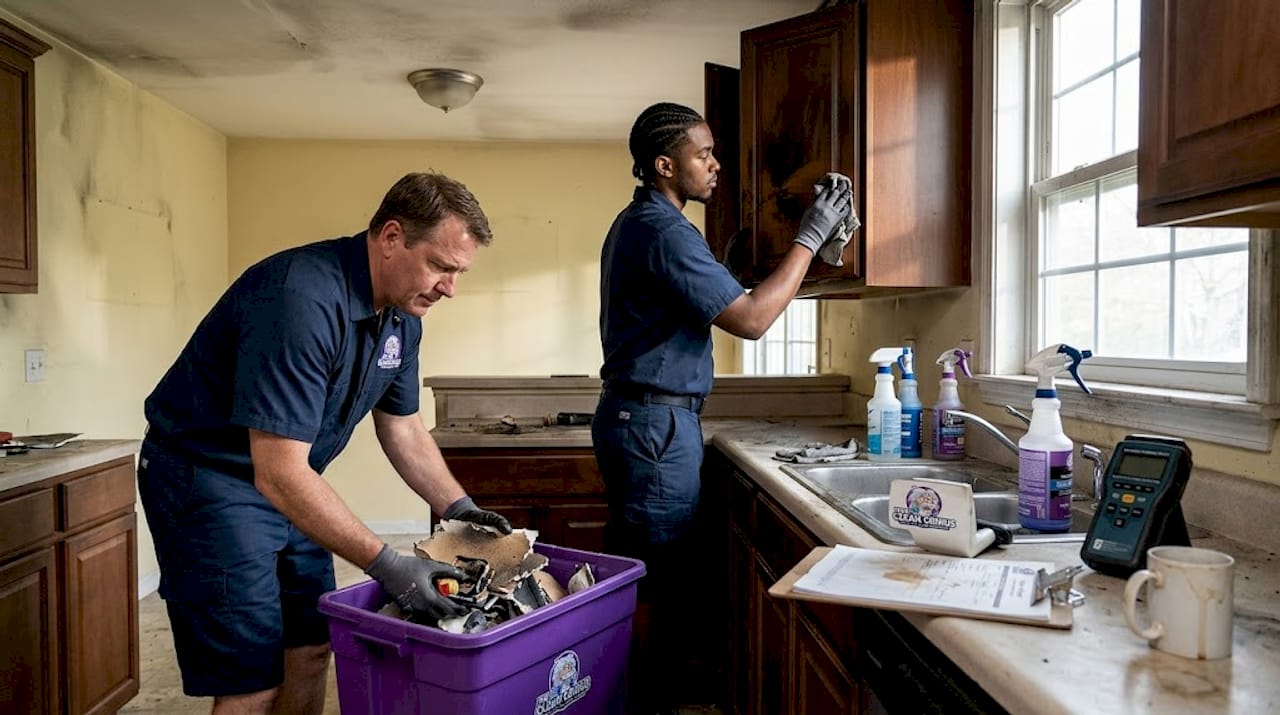
The emergency phase also signals your insurer to dispatch an adjuster. That visit typically happens within three to seven business days in the Chicago area, though complex commercial claims or catastrophic weather events can push it later. The faster you report, the faster everything else moves.
Alongside water extraction and board-up, fire damage restoration teams will flag areas where smoke and soot have traveled far beyond the point of origin. Smoke is deceptive. It moves through wall cavities, HVAC ducts, and closets, depositing fine particles in rooms that appear totally untouched. Catching that spread early keeps the overall scope manageable.
The fire damage cleanup timeline: From debris removal to deep cleaning
With the emergency phase covered, it’s time to map out the entire cleanup timeline step by step.
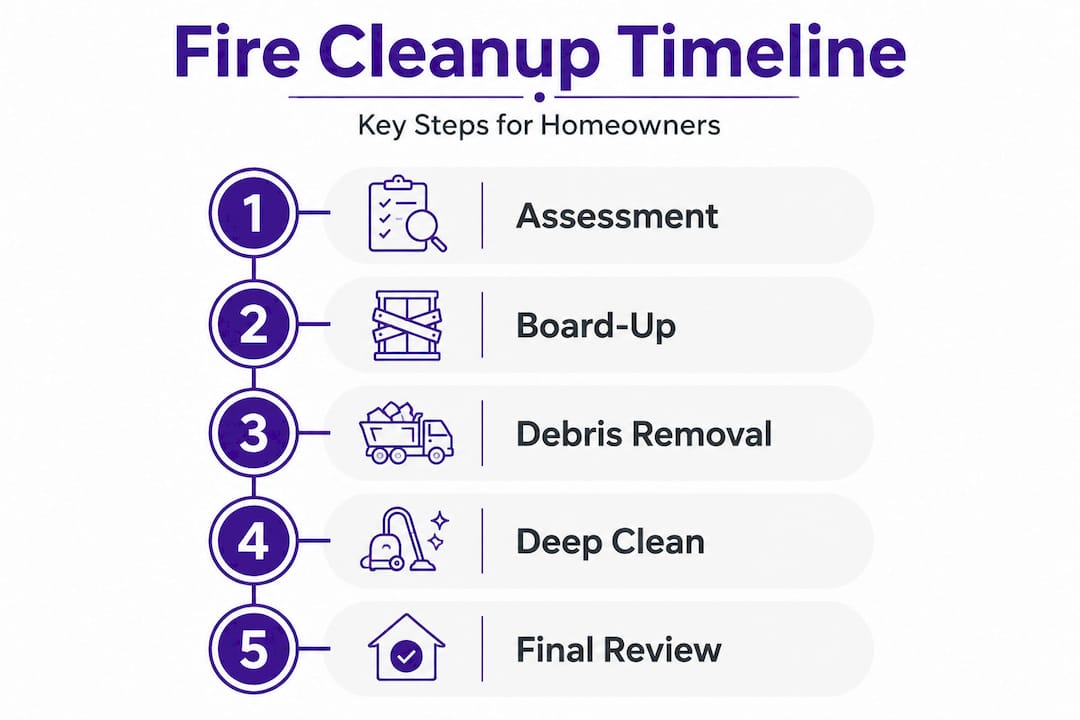
The total time for fire damage cleanup in most Chicagoland homes runs anywhere from one week for minor, contained fires to three months or more for full-structure fires. The full restoration process involves several distinct stages, and each one feeds the next. Skipping or rushing a phase almost always creates a bigger problem down the line.
Fire damage cleanup: Stage-by-stage timeline
| Stage | Tasks | Typical timeframe |
|---|---|---|
| 1. Assessment | Safety check, damage mapping, air quality test | Day 1 to 2 |
| 2. Emergency services | Water extraction, board-up, hazmat flagging | Day 1 to 3 |
| 3. Debris removal | Removing charred materials, demolished drywall | Day 2 to 5 |
| 4. Structural drying | Industrial drying equipment for water-saturated areas | Day 3 to 7 |
| 5. Soot and smoke cleaning | Surface cleaning, HVAC cleaning, odor treatment | Day 5 to 14 |
| 6. Contents restoration | Cleaning and restoring salvageable belongings | Day 7 to 21 |
| 7. Structural repairs | Rebuilding walls, flooring, ceilings, roof | Week 2 to 8+ |
| 8. Final walkthrough | Verification, air quality retest, sign-off | End of project |
The cleanup stages in order:
- Assessment and emergency stabilization: The restoration team documents everything, extracts water, and secures the structure.
- Debris removal: Burned materials, collapsed drywall, and unsalvageable items are cleared. This is physically demanding work and often takes one to three days depending on fire size.
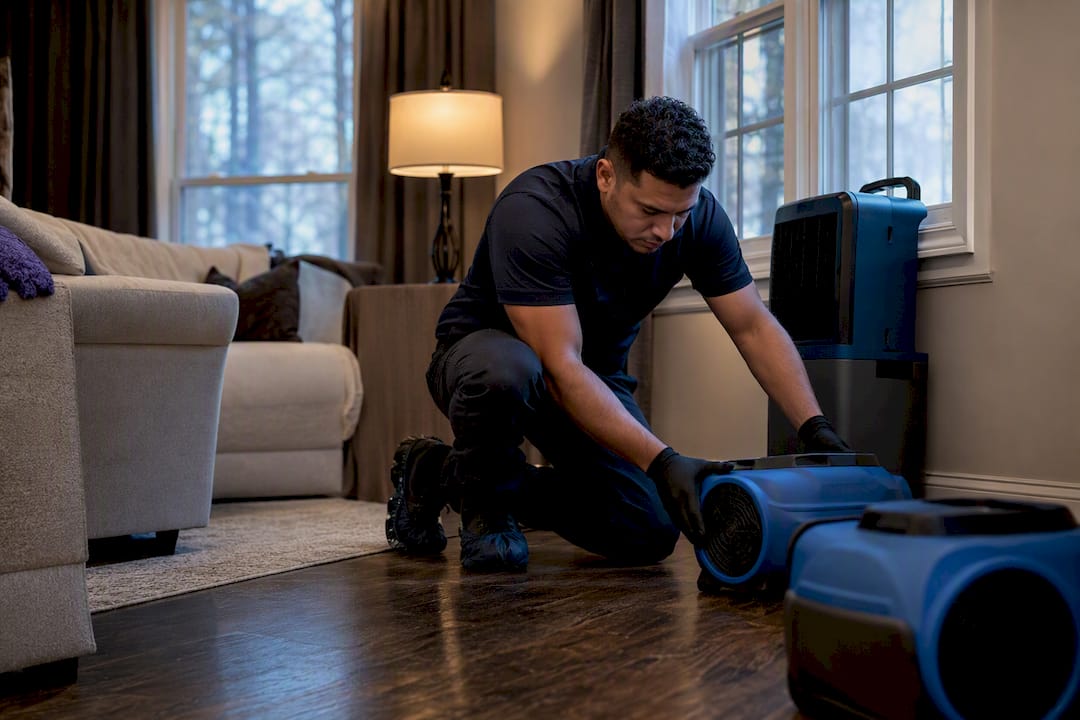
- Structural drying: Because firefighting water saturates framing, subfloor, and insulation, industrial air movers and dehumidifiers run continuously. Skipping thorough drying guarantees mold within weeks.
- Soot and smoke remediation: Every surface that smoke touched needs specialized cleaning products. Standard household cleaners do not remove smoke residue effectively, and scrubbing without the right technique can drive soot deeper into porous materials.
- Odor elimination: Thermal fogging, ozone treatment, or hydroxyl generators neutralize smoke odor molecules embedded in walls and furniture.
- Contents restoration after fire: Clothes, documents, electronics, and furniture are evaluated, cleaned, and either restored or documented for replacement claims.
- Structural rebuilding: Contractors repair or rebuild damaged sections. This phase has the most variability in timing because it depends on permit approvals, material availability, and contractor scheduling in the Chicago market.
- Final inspection and clearance: Air quality testing confirms the home is safe to reoccupy before you move back in.
Important: According to industry data, fires affecting more than 30% of a home’s structure commonly push total restoration timelines past the 60-day mark. Early, thorough assessment is the single best way to forecast your actual timeline with confidence.
Insurance coordination: How to stay on track
Understanding the cleanup timeline also means knowing how to work with your insurer to avoid unnecessary setbacks.
Insurance is not a passive process where you wait for checks to arrive. Homeowners who stay actively involved at every stage almost always see faster approvals and fewer claim disputes. The key is treating your insurer as a project stakeholder, not an obstacle.
Essential insurance coordination steps at each cleanup phase:
- Day one: Call your insurer immediately, report the fire, and request your claim number and adjuster assignment. Ask specifically how long the adjuster visit will take to schedule.
- Before any work begins: Confirm what emergency services your policy covers, since water extraction and board-up are often reimbursable but require pre-authorization from some carriers.
- During assessment: Share the restoration company’s written damage scope with your adjuster. The more detail the scope contains, the faster the insurer can approve the work.
- At each major phase completion: Send updated photos, the restoration team’s progress reports, and any new damage findings to your claims representative.
- For contents: A detailed room-by-room inventory with purchase dates and estimated replacement values helps the adjuster process the personal property portion of your claim much faster. Certified restoration professionals who evaluate fire-damaged belongings can provide itemized reports that insurers accept directly.
- Keep all receipts: Hotel stays, meals, clothing, and other living expenses are typically covered under Additional Living Expenses in your homeowner’s policy. Missing receipts mean missing reimbursement.
Pro Tip: Request a supplemental estimate from your restoration contractor if new damage surfaces mid-project. Insurers expect supplements on fire claims. Submitting one promptly prevents your total payout from being capped at the original estimate, which rarely captures everything after debris removal exposes hidden damage.
One of the most overlooked friction points is the gap between what your restoration contractor sees and what your insurance adjuster approves. These two parties often use different pricing databases, and the difference can stall your project by weeks. Having your restoration company communicate directly with your adjuster, with your permission and involvement, speeds up that reconciliation significantly.
Common roadblocks and how to avoid them
Even with the best plan, some issues can slow down the process, but most can be avoided with the right approach.
Most fire restoration delays are not caused by the fire itself. They come from process breakdowns: missing documentation, slow approvals, scope disputes, or choosing a contractor who is stretched too thin to prioritize your project. Experienced fire damage restoration providers know which bottlenecks to address proactively.
Proactive vs. reactive timeline management
| Approach | Behavior | Timeline impact |
|---|---|---|
| Proactive | Written scope agreed before work starts | Avoids mid-project disputes |
| Proactive | Insurer notified at every stage | Faster approvals, fewer holds |
| Proactive | Certified contractor hired within 48 hours | Structural drying starts on schedule |
| Reactive | Waiting for insurer approval before emergency work | Water damage and mold add weeks |
| Reactive | No documentation of contents | Contents claim stalls or gets denied |
| Reactive | Scope changes requested mid-project | Adds days or weeks to rebuild phase |
Hidden damage is the most common source of unplanned delays. Once debris removal exposes framing and subfloor, it is extremely common to find water saturation, previous mold, or pre-existing damage that the insurer will now want to separate from fire-related repairs. Having a restoration partner who documents discovery clearly and communicates with your insurer factually keeps this from turning into a coverage dispute.
Contractor availability is a real factor in the Chicago market. High-demand periods, especially after severe weather when multiple homes need restoration simultaneously, mean that unaffiliated contractors may not start work for weeks. Restoration companies that operate 24/7 and maintain their own staffing pipeline, rather than purely relying on subcontractors, keep projects moving even during busy seasons.
“The homes that recover fastest are the ones where the homeowner stayed engaged and the restoration company communicated every step clearly. It’s rarely about the fire size.”
You can review recent fire cleanup projects to get a realistic picture of what different fire scopes look like in practice and how long various stages actually took in local Chicagoland homes.
Why most fire cleanup delays are preventable: An expert’s perspective
After years of handling fire restoration in Chicagoland homes, the single most consistent pattern we see is this: homeowners assume delays are inevitable because they’ve been told that by people who benefit from long timelines. That’s not how we operate, and it’s not an honest picture of what’s possible.
The conventional wisdom says fire cleanup takes “as long as it takes” and that surprises are just part of the process. That view protects contractors who don’t plan well and insurers who prefer slow-rolling claims. In reality, the vast majority of timeline overruns trace back to two preventable problems: an incomplete assessment at the start and a breakdown in communication somewhere in the middle.
A complete written scope, produced before a single piece of debris is removed, changes everything. It gives the insurer a concrete document to approve. It gives your contractor a commitment to hold to. It gives you a benchmark for measuring progress. Without it, everyone operates on assumptions, and assumptions create disputes that add weeks to your timeline.
Weekly check-in calls between the homeowner, restoration team, and insurance adjuster might sound excessive, but they cut resolution time on scope disputes from weeks to days. Most homeowners never ask for them because they don’t know they can. You can and should.
Looking at our recent fire cleanup projects in communities across Chicagoland, the jobs that finished on schedule shared one trait: the homeowner was an active participant, not a passive bystander. They asked questions, reviewed progress reports, and escalated quickly when something stalled. That level of engagement is genuinely within reach for any homeowner who knows what to look for.
Connect with Chicagoland fire cleanup experts for a faster recovery
If your home has suffered fire damage, having a local team that already knows the Chicagoland insurance landscape and restoration process can cut weeks off your timeline.

The Clean Genius is a family-owned restoration company with over 25 years of combined experience and more than 400 five-star reviews from homeowners across Arlington Heights, Naperville, Schaumburg, Wheaton, and dozens more communities in the greater Chicago area. We handle everything from emergency water extraction and board-up to complete soot removal and structural rebuilding, and we work directly with your insurance company at every stage. If you want your cleanup timeline to stay on track, our fire damage restoration services are available 24/7 for emergency response. Ready to get started? Contact The Clean Genius today and get a clear, written scope within 24 hours.
Frequently asked questions
How long does fire damage cleanup take for most Chicagoland homes?
Most fire damage cleanups last one to three weeks for moderate fires, but large-structure fires can extend timelines to two or three months depending on rebuild complexity and insurance speed.
What factors can slow down the fire restoration timeline?
Common slowdowns include delayed insurance approvals, hidden structural damage discovered during debris removal, and contractor availability during high-demand seasons in the Chicago market.
Should I start cleaning up before my insurance adjuster arrives?
Only perform emergency steps like water removal or boarding up exposed openings, and photograph every inch of the damage before moving or cleaning anything to protect your insurance claim.
Who should handle debris and content restoration after a fire?
Certified restoration professionals have the specialized equipment and training needed for safe debris removal and contents restoration, and their documentation is formatted to support insurance claims directly.