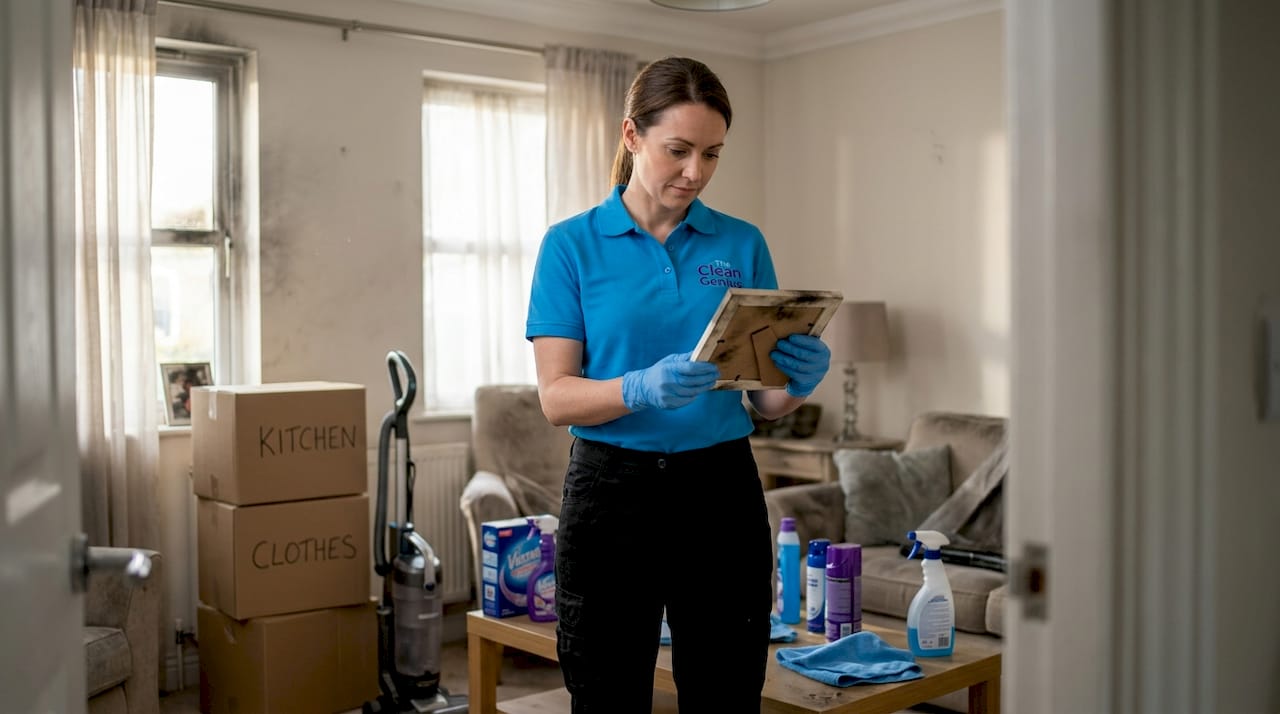

When the fire is out, most homeowners assume the worst is over. It isn’t. Smoke, soot, and toxic residues continue working on your furniture, clothing, electronics, and keepsakes long after firefighters leave, quietly corroding metals, etching glass, and embedding volatile organic compounds deep into fabrics and wood. Contents restoration after fire involves professional assessment, packout, cleaning, deodorization, and repack of personal belongings to pre-loss condition, guided by the ANSI/IICRC S700 standard. Understanding this process is the difference between recovering what matters and losing it permanently.
Table of Contents
- What is contents restoration after fire?
- Step-by-step process: How professionals restore your belongings
- Why speed, standards, and science matter in contents restoration
- DIY vs. hiring professionals: What most homeowners miss
- The real reason contents restoration can make or break your recovery
- Ready for peace of mind? Trust certified fire restoration experts
- Frequently asked questions
Key Takeaways
| Point | Details |
|---|---|
| Contents restoration defined | It means cleaning, deodorizing, and restoring your belongings, not just fixing the structure. |
| Standards and science matter | Compliance with ANSI/IICRC S700 and PRV testing protect your health and home value. |
| Avoid DIY risks | Professional methods prevent contamination and persistent smoke odors better than home cleaning attempts. |
| Speed impacts results | Quick action after a fire can greatly increase the chances of recovering more of your belongings. |
What is contents restoration after fire?
Contents restoration is not the same as fixing your walls or replacing drywall. It focuses entirely on your personal belongings, the items that make a house a home, and it requires a completely different skill set, equipment, and methodology than structural repair.
Contents restoration covers everything you own, including:
- Upholstered furniture and wood furniture
- Clothing, bedding, and textiles
- Electronics and appliances
- Books, photographs, and important documents
- Artwork, collectibles, and heirlooms
- Kitchen items, cookware, and pantry goods
The process is formally defined and guided by the ANSI/IICRC S700 standard, which sets the professional benchmark for fire and smoke damage restoration. This standard matters because it mandates scientific approaches to cleaning, deodorization, and quality verification, so you are not left guessing whether your belongings are truly clean or just smell better temporarily.
Here is a quick comparison of what contents restoration covers versus what structural restoration covers:
| Category | Contents restoration | Structural restoration |
|---|---|---|
| Focus | Personal belongings and possessions | Walls, floors, ceilings, framing |
| Typical location | Offsite facility or on-property | On-property only |
| Key methods | Packout, cleaning, deodorization, repack | Demolition, rebuild, painting |
| Standards used | ANSI/IICRC S700 | ANSI/IICRC S500, local building codes |
| Insurance involvement | Contents claim | Dwelling/structure claim |
Structural restoration follows restoration guidelines that overlap in some areas, but the two processes are handled separately and often by different specialists. Knowing this distinction helps you ask the right questions and ensure nothing gets overlooked in your insurance claim.
Step-by-step process: How professionals restore your belongings
With the definition clear, it’s vital to know exactly how the restoration process unfolds in your home or offsite. Professional contents restoration is not a single action. It is a carefully sequenced workflow where skipping or reversing any step can cause lasting damage or allow odors to return weeks later.
Here is how certified technicians typically approach the process:
- Initial assessment and documentation. Technicians photograph and catalog every affected item before anything is moved. This creates the paper trail your insurance adjuster needs and protects you if disputes arise about pre-loss condition.
- Contents inventory and packout. Belongings are carefully packed, labeled, and transported to a controlled restoration facility. This protects items from further contamination and gives technicians a clean environment to work in.
- Sorting and triage. Items are sorted by material type, damage severity, and restorability. Some items, particularly porous materials with heavy soot penetration, may be deemed non-restorable and documented for replacement claims.
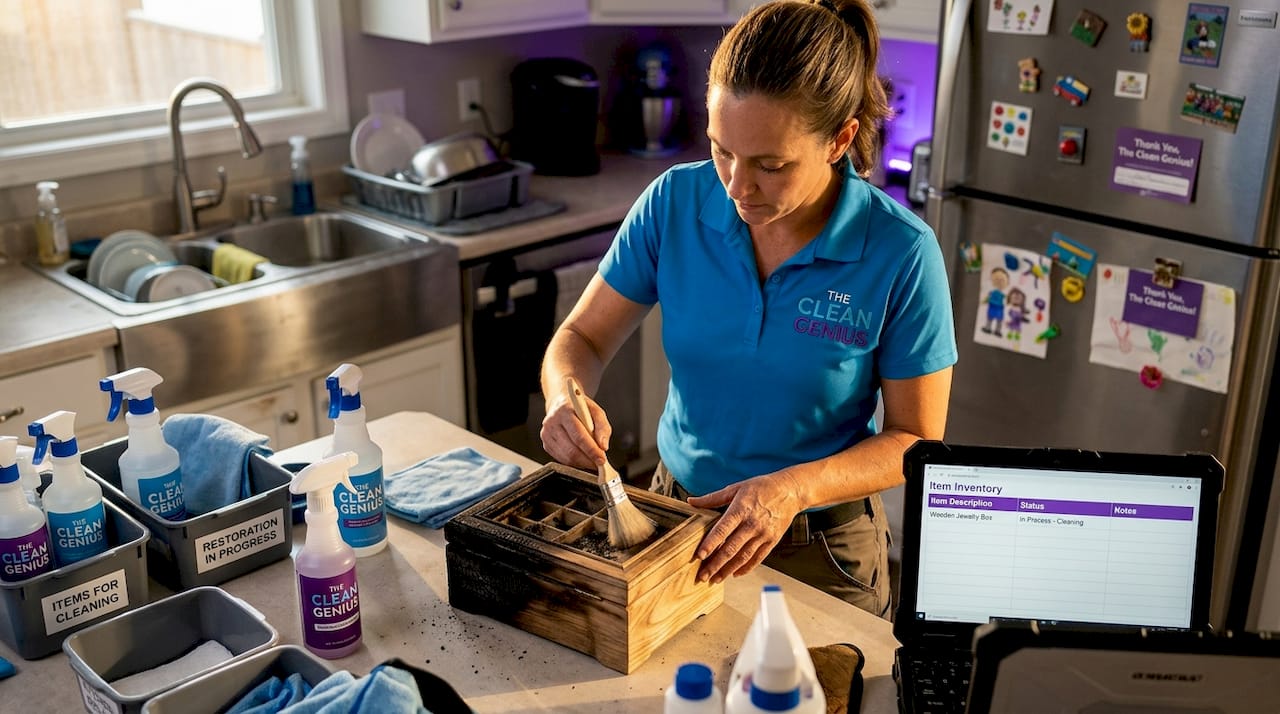
- Surface cleaning. Dry soot is removed first using HEPA vacuums and dry sponges before any wet cleaning begins. Applying moisture to dry soot pushes it deeper into surfaces, making removal far harder.
- Wet cleaning and specialty methods. Depending on the material, technicians use ultrasonic cleaning for hard goods, ozone chambers for certain textiles, and specialized chemical solutions matched to each surface type.
- Deodorization. This is where many DIY attempts fail. True deodorization requires eliminating odor-causing molecules at the source, not masking them. Professionals use hydroxyl generators, thermal fogging, or advanced dry-fog technology to reach into porous materials.
- Sealing. Where necessary, surfaces are sealed to lock in any residual compounds that cannot be fully extracted.
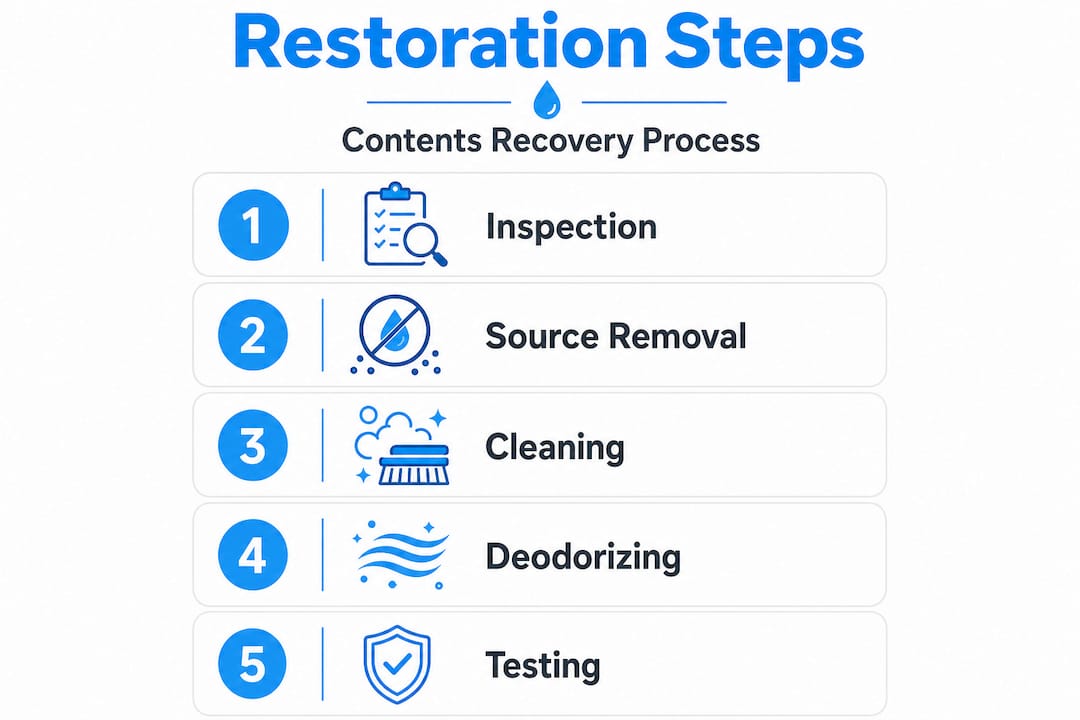
- Post-remediation verification (PRV) testing. This is the step that separates thorough professionals from shortcuts. PRV testing confirms that volatile organic compounds (VOCs) and residual odors are gone, not just undetectable to the nose.
- Repack and return. Cleaned and verified items are repacked and returned to your home once the structure is cleared for occupancy.
“Source removal must happen before deodorization or sealing. Skipping this sequence traps odor-causing compounds beneath treatments, and they will resurface as temperatures and humidity change.”
This sequencing is not optional. As smoke odor research confirms, source removal must precede deodorization, and PRV testing is the only reliable way to confirm no residual VOCs remain. You can see how this plays out in practice by reviewing our recent restoration projects, where proper sequencing consistently delivers lasting results.
Pro Tip: Ask your restoration company specifically whether they perform PRV testing before returning your belongings. If they cannot explain what PRV testing is or say they do not use it, find a different contractor.
The fire damage restoration techniques used by certified teams are calibrated to each material type, which is why a one-size-fits-all approach almost always leaves something behind.
Why speed, standards, and science matter in contents restoration
Understanding the steps, let’s look at why expertise and timing make such a difference and what sets certified pros apart from general cleaners or handymen.
Time is not on your side after a fire. Soot begins bonding to surfaces within minutes of a fire being extinguished. Acids in smoke residue start etching glass and corroding metals within hours. Fabrics absorb odor compounds deeply the longer they sit untreated. The FEMA guidance on smoke damage emphasizes that timely action prevents corrosion and etching that becomes permanent if left too long, and that PRV testing provides the only scientific proof that remediation actually succeeded.
Here is a direct comparison of what standard-compliant restoration looks like versus non-compliant work:
| Factor | ANSI/IICRC S700 compliant | Non-compliant or DIY |
|---|---|---|
| Assessment | Documented inventory, photo evidence | Informal or none |
| Cleaning sequence | Dry removal before wet cleaning | Often skipped or reversed |
| Deodorization | Source removal, then treatment | Masking agents only |
| Verification | PRV testing with documented results | Visual or smell check only |
| Recurrence risk | Very low | High |
| Insurance documentation | Complete and standardized | Often incomplete |
The restoration expertise required to follow this standard is not something you can replicate with store-bought products. Certified technicians understand the chemistry of smoke, the behavior of different soot types (wet soot from slow-burning fires behaves very differently from dry soot from fast, hot fires), and the specific protocols for each material category.
Why PRV testing matters more than most homeowners realize: PRV testing uses air sampling and surface wipe testing to detect VOCs and particulate matter at levels your nose cannot perceive. A room can smell clean and still contain harmful compounds at concentrations that affect indoor air quality for months. Families with children, elderly members, or anyone with respiratory conditions are particularly vulnerable to these invisible residuals.
The science behind contents restoration is not about being overly cautious. It is about making sure your home is genuinely safe to live in again, not just visually acceptable.
DIY vs. hiring professionals: What most homeowners miss
To bring it home, let’s get honest about the decision many homeowners face after a fire: tackling cleanup yourself or calling in certified restoration professionals.
The appeal of DIY is understandable. You want to act fast, save money, and feel in control of a situation that already feels overwhelming. But there are serious risks that most homeowners do not anticipate until they are already dealing with the consequences.
Health risks of DIY fire cleanup:
- Soot particles are extremely fine and become airborne during cleaning, creating inhalation hazards
- Smoke residue contains carcinogens, heavy metals, and toxic compounds from burned synthetic materials
- Disturbing contaminated items without proper PPE (personal protective equipment) exposes you and your family to concentrated toxins
- Cross-contamination can spread residue to areas of your home that were not originally affected
Why consumer products fail:
Most off-the-shelf cleaners are designed for surface dirt, not the complex chemical compounds in fire residue. They may remove visible soot from a surface while leaving behind the VOCs and acidic compounds that continue damaging materials and affecting air quality. Masking odors with sprays or candles is particularly counterproductive because it gives a false sense of success while the underlying contamination remains.
As IICRC S700 research shows, DIY attempts risk spreading contamination and consistently produce callbacks when incomplete deodorization allows odors to return. Certified professionals use controlled methods that prevent cross-contamination and achieve results that hold up over time.
What certified professionals bring that you cannot replicate:
- Proper containment to prevent cross-contamination during packout
- Industrial-grade equipment calibrated for specific material types
- Documented protocols that satisfy insurance requirements
- PRV verification that gives you legal and practical proof of successful restoration
- Warranties and guarantees on their work
Pro Tip: Before signing with any restoration company, ask whether they carry IICRC certification and whether their process includes post-remediation verification. These two questions alone will filter out most unqualified contractors.
If you are weighing your options, reviewing the reasons to hire restoration professionals can help you understand exactly what you are getting with certified help versus going it alone.
The real reason contents restoration can make or break your recovery
After working through hundreds of fire restoration cases across Chicagoland, one pattern stands out clearly. Homeowners who focus only on the visible fire damage, the charred walls, the burned flooring, the blackened ceilings, consistently underestimate what is happening to their belongings and their indoor air quality.
We have seen families move back into structurally repaired homes only to find that the smell returns within weeks, that their children are coughing, that fabrics and furniture they thought were fine continue to deteriorate. Every single time, the root cause was incomplete contents restoration. The structure looked fine. The belongings were the problem.
Here is the uncomfortable truth: your insurance adjuster is focused on line items and replacement costs. They are not always thinking about whether your grandmother’s quilt can be saved, or whether the smoke compounds in your couch cushions are still off-gassing into your living room air. You have to advocate for thorough contents restoration yourself, and that means knowing what to ask for.
The real-world restoration stories we have documented show that families who push for complete contents restoration, including PRV testing and proper documentation, recover faster and more completely than those who accept the minimum. It is not just about saving possessions. It is about reclaiming your home as a genuinely safe, livable space.
What Chicagoland homeowners have taught us is that resilience after a fire is not just emotional. It is practical. It comes from making informed decisions in the first 48 to 72 hours, choosing certified professionals, and insisting on verification rather than taking someone’s word that the job is done.
Ready for peace of mind? Trust certified fire restoration experts
After a fire, every hour matters. Smoke compounds continue damaging your belongings and your home’s air quality while you are still processing what happened.

The Clean Genius is a family-owned restoration company serving Chicagoland with over 25 years of combined experience and more than 400 five-star reviews. Our certified teams follow ANSI/IICRC S700 standards for every contents restoration project, from initial packout and inventory through deodorization, PRV testing, and verified repack. We work directly with your insurance company to document everything properly and fight for the thorough restoration your family deserves. Our fire damage restoration services are available 24/7 across Arlington Heights, Naperville, Schaumburg, Wheaton, Elgin, and the greater Chicagoland area. Call us today and let us help you get your home and your life back.
Frequently asked questions
What items can usually be saved with contents restoration after fire?
Personal belongings like furniture, clothing, electronics, and important documents can often be cleaned and deodorized to a pre-loss condition if addressed promptly by certified professionals following ANSI/IICRC S700 protocols.
How long does contents restoration after fire usually take?
The timeline varies based on fire size and item types, but timely action prevents permanent corrosion and etching; most projects run from several days to a few weeks.
Why do smoke odors sometimes come back after cleaning?
When smoke sources are not fully removed before deodorizing, VOCs and odor compounds remain trapped beneath treatments and resurface over time. Proper sequencing with PRV verification is the only reliable way to prevent this.
What standards should my restoration company follow?
Your restoration company should follow ANSI/IICRC S700 compliance, which ensures proper cleaning, deodorization, sequencing, and post-remediation verification testing for lasting results.